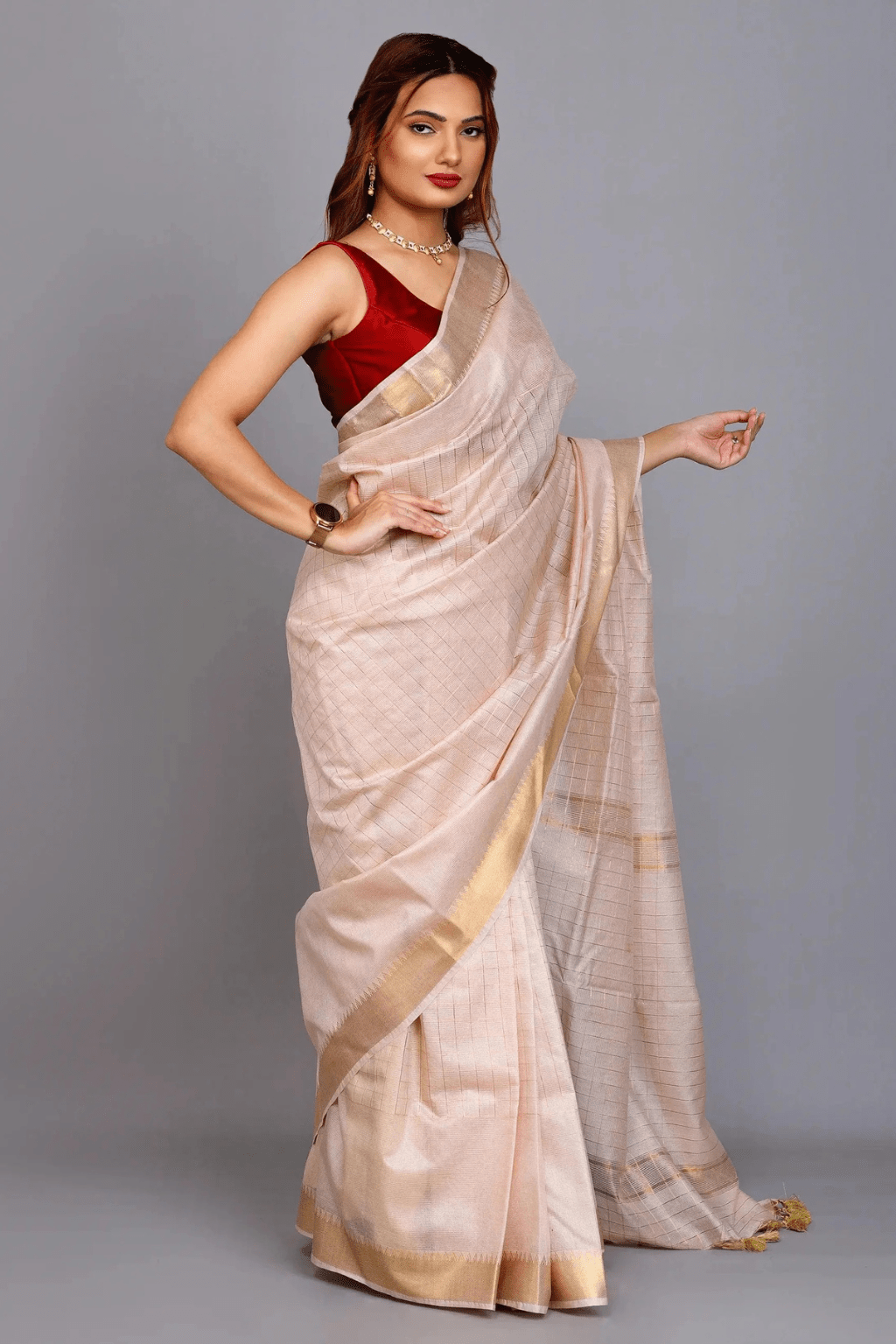
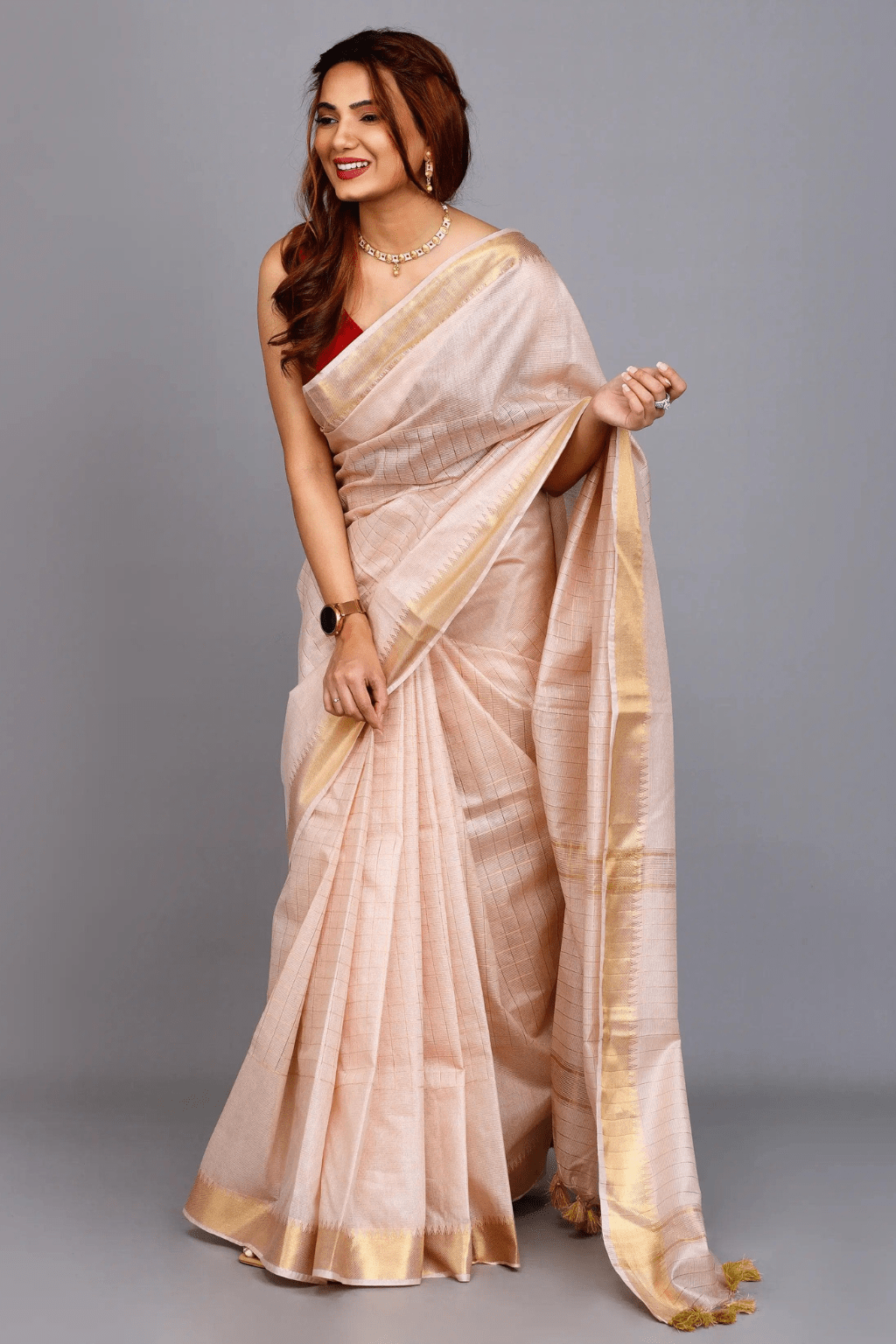
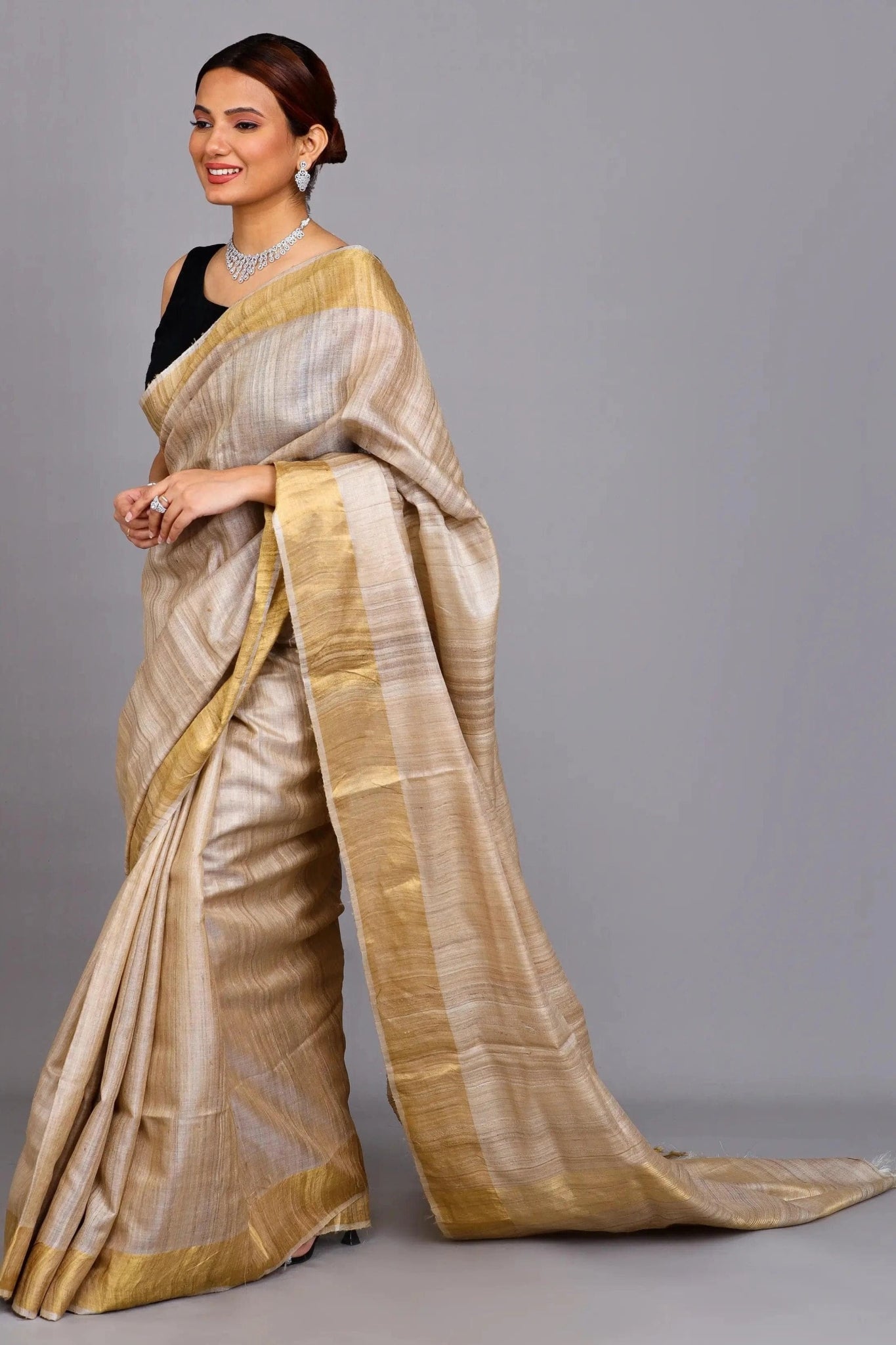
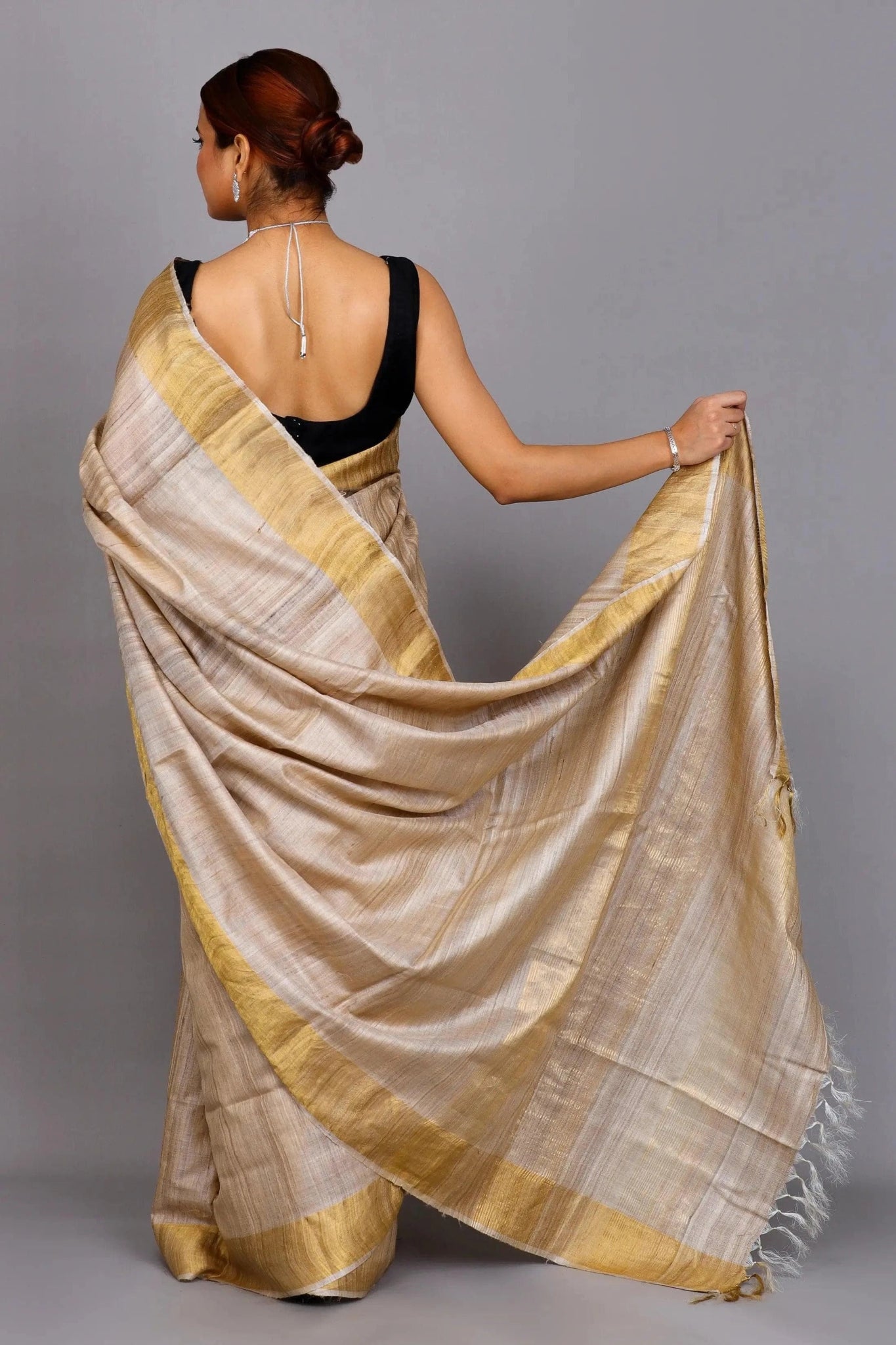
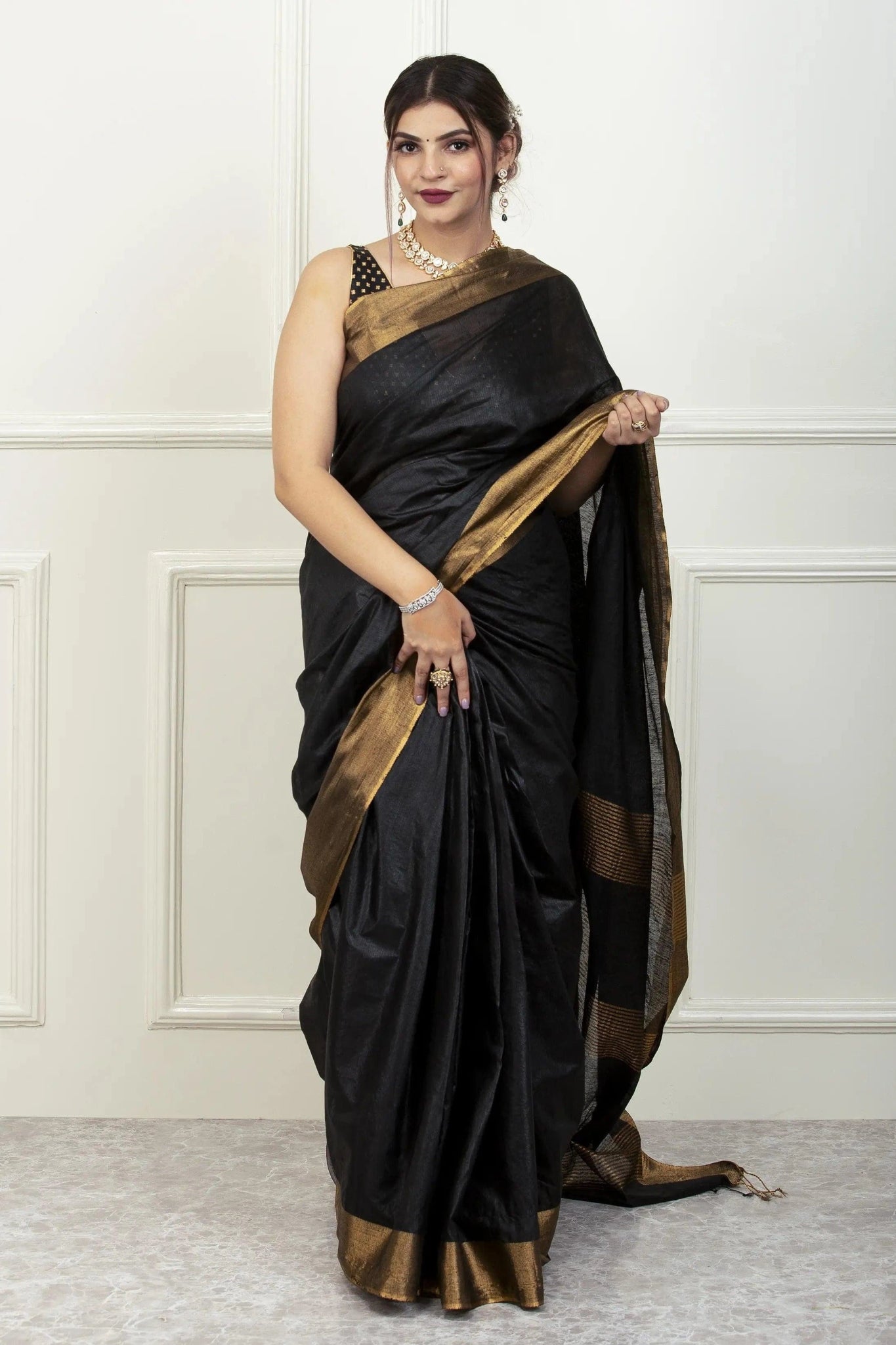
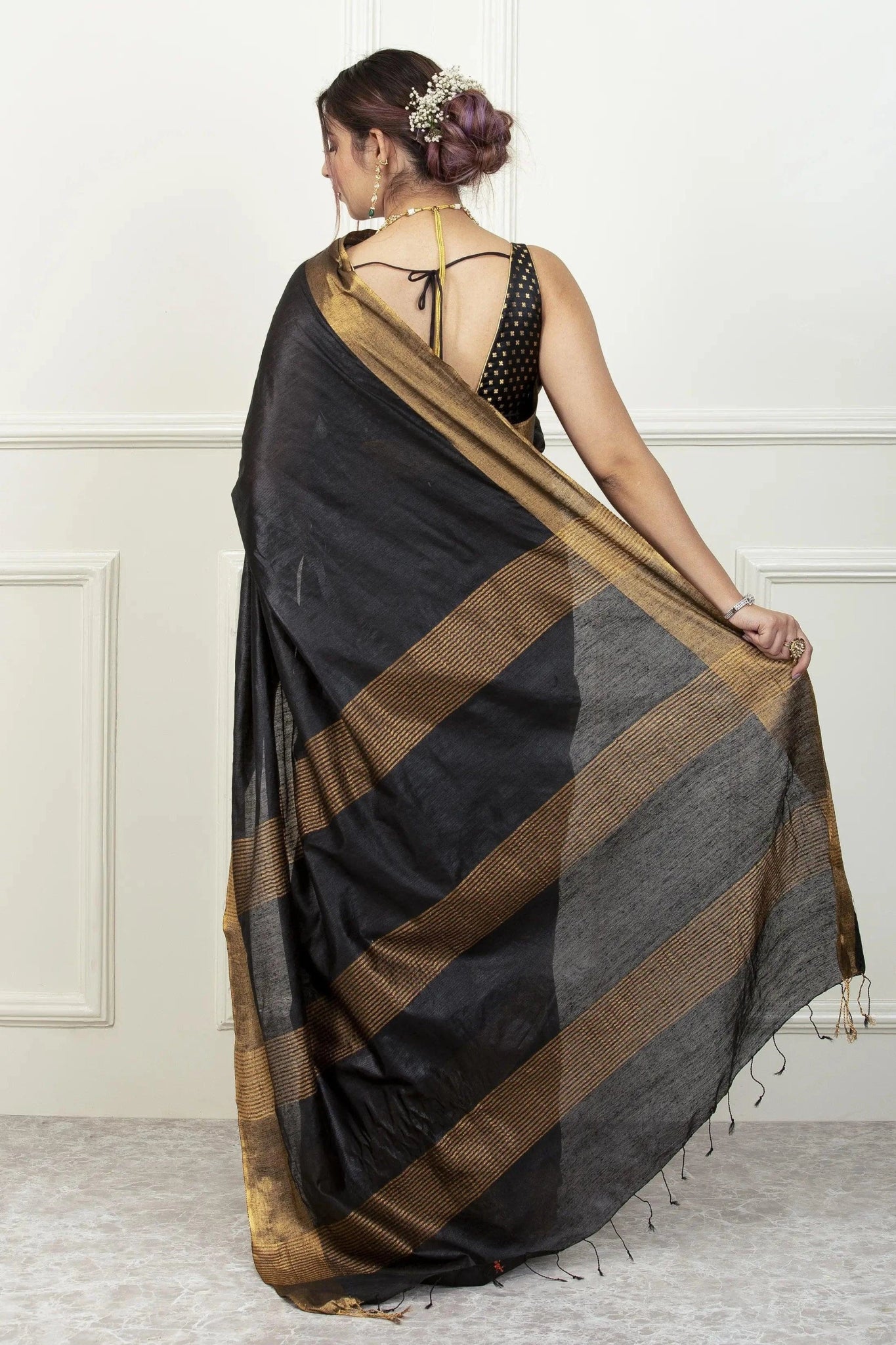
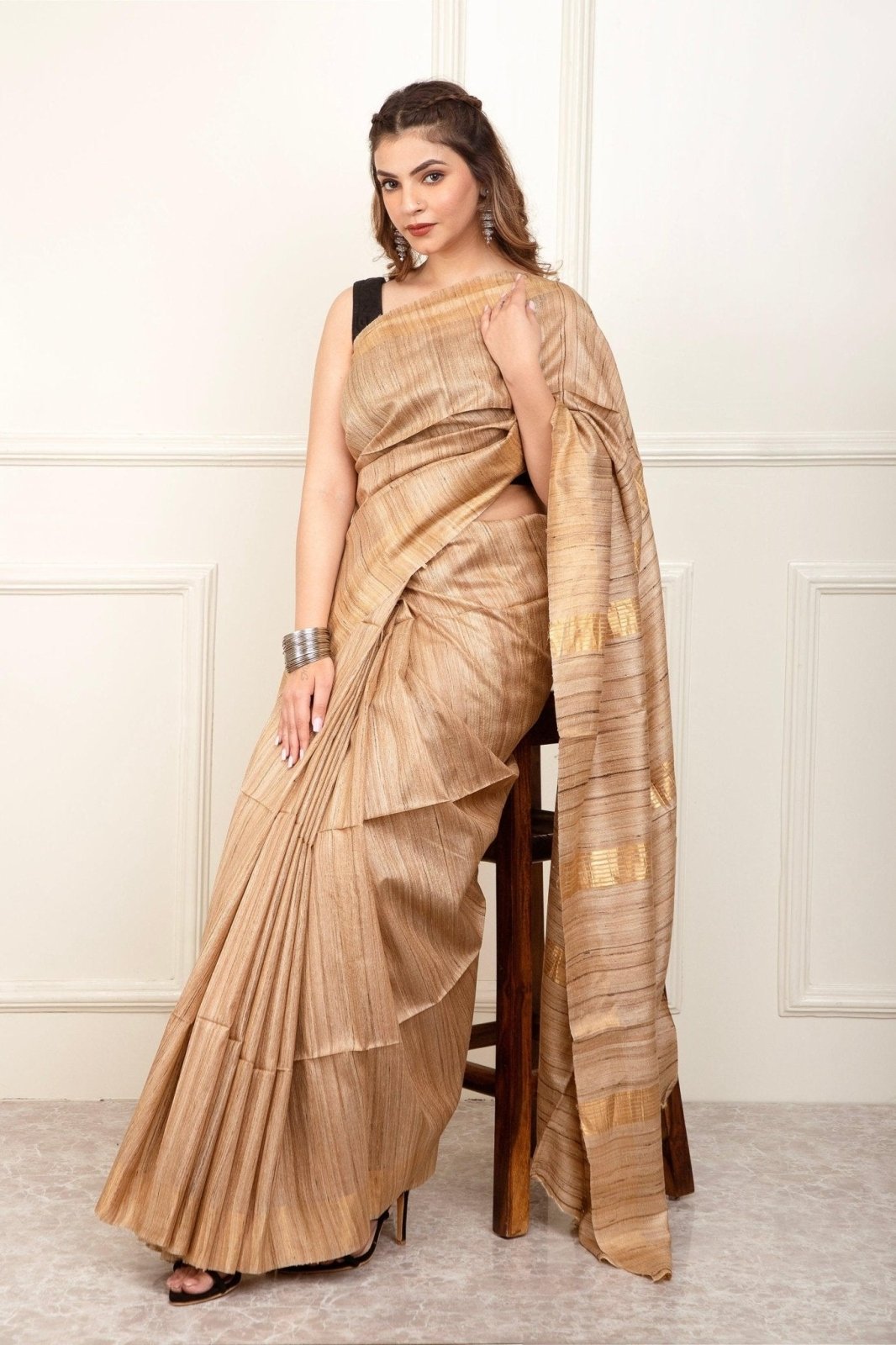
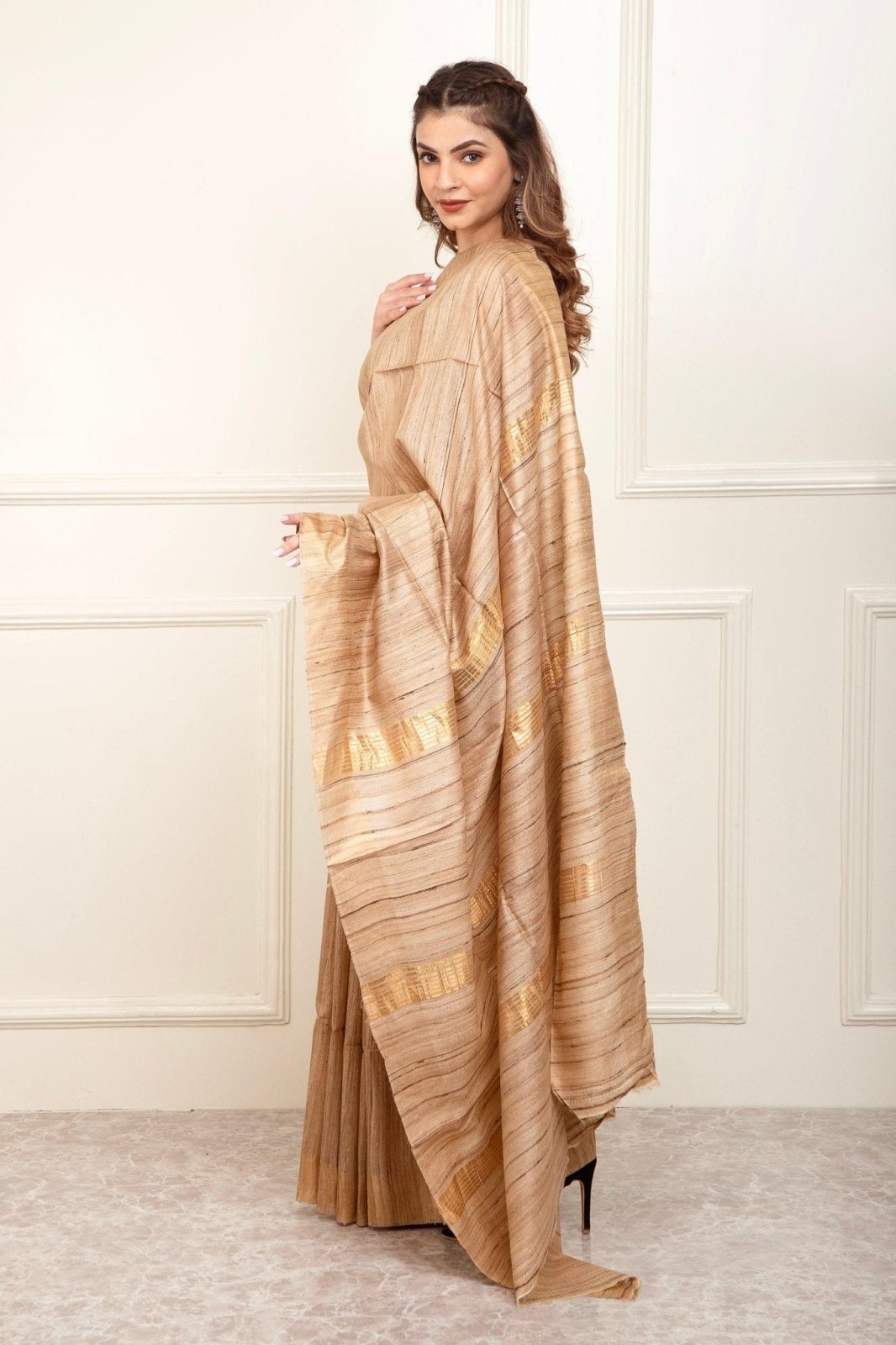
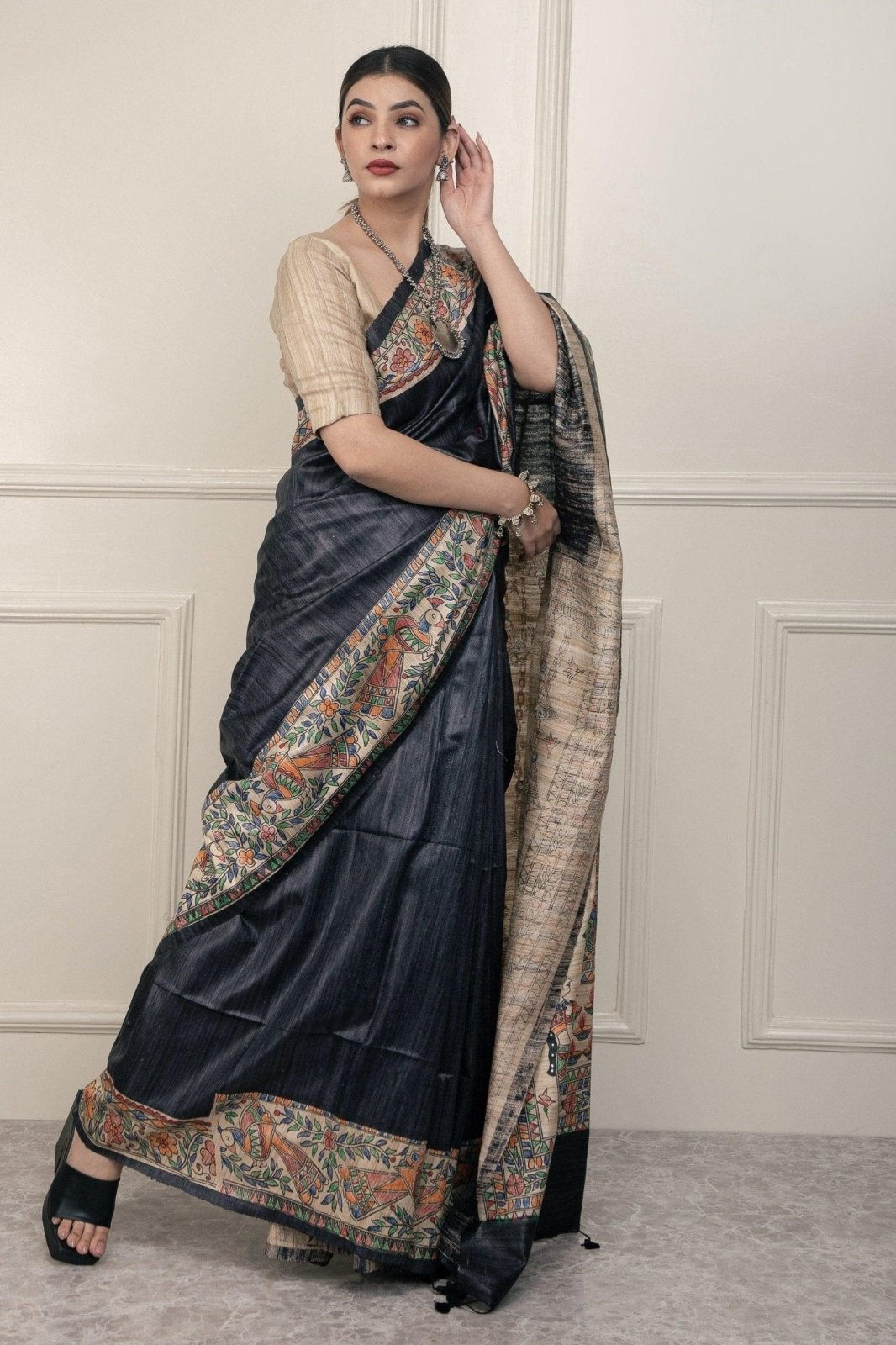
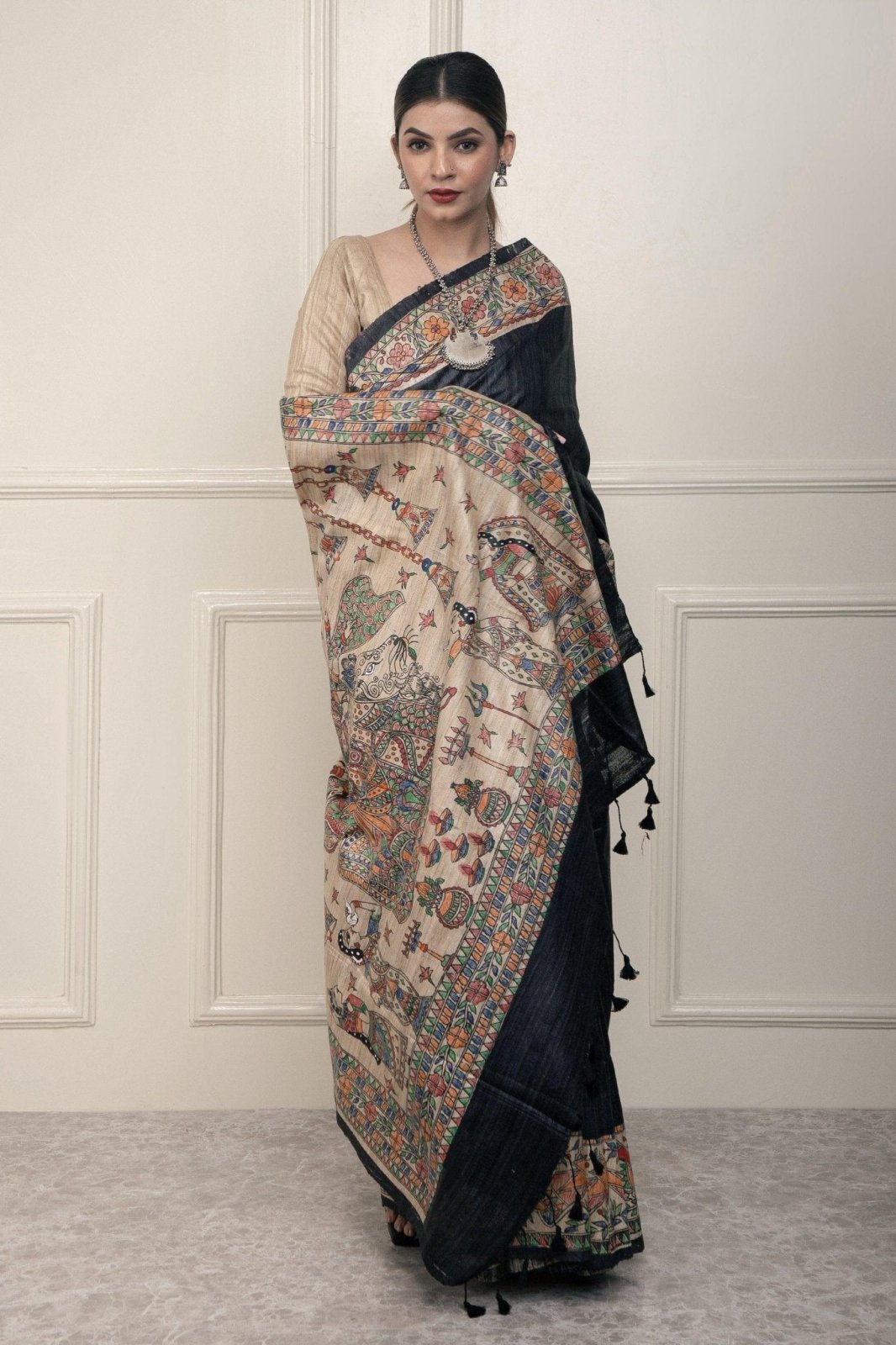
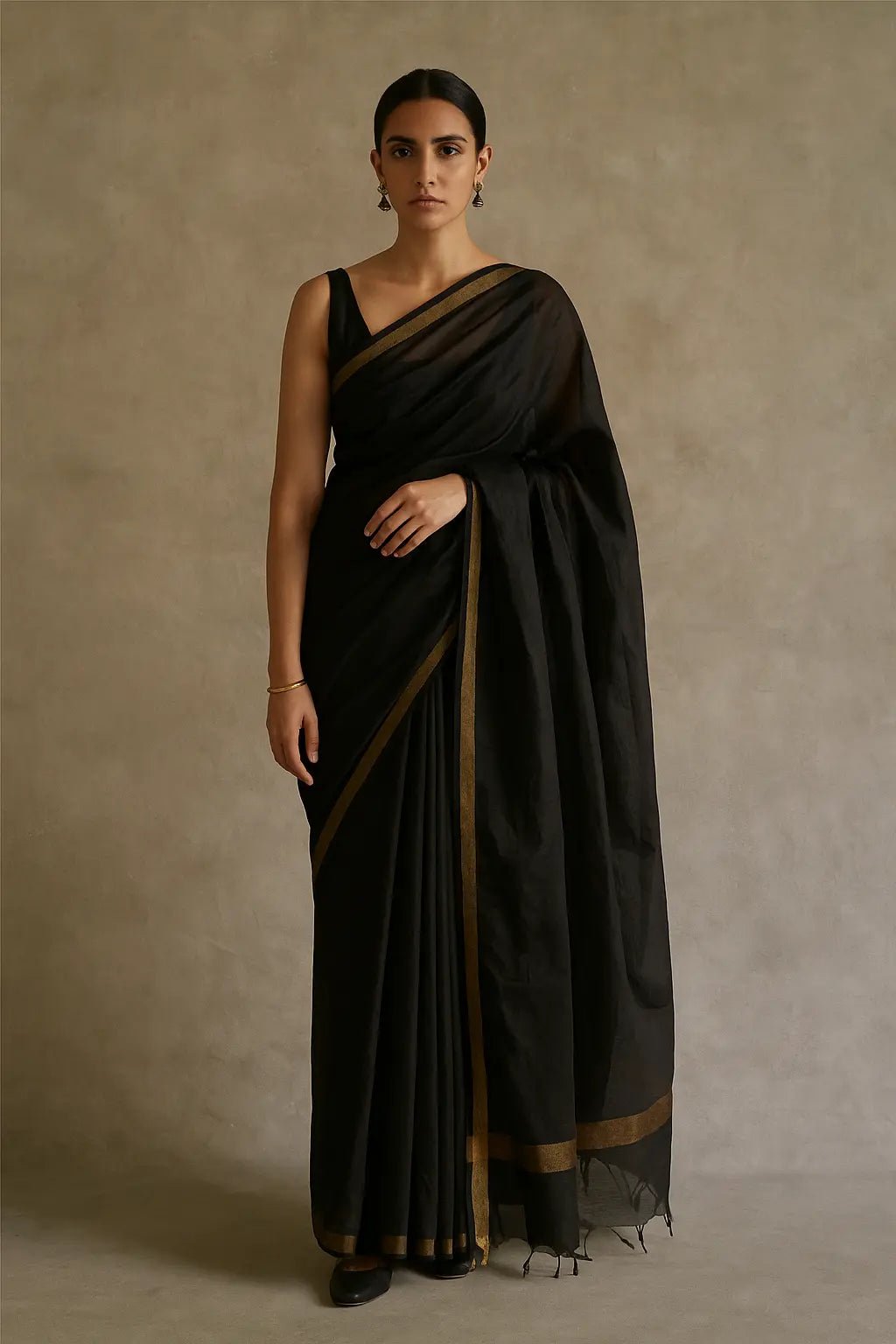
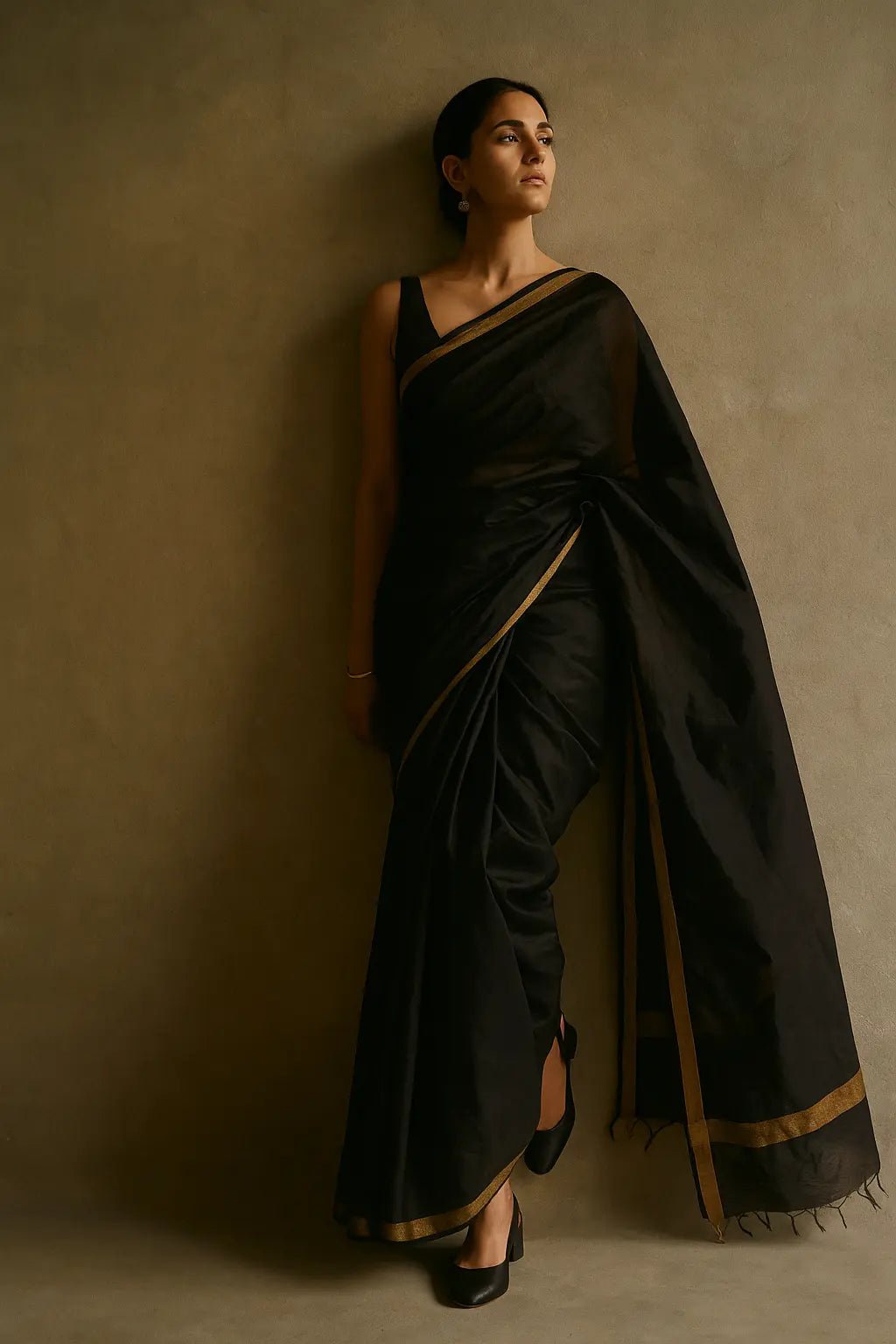
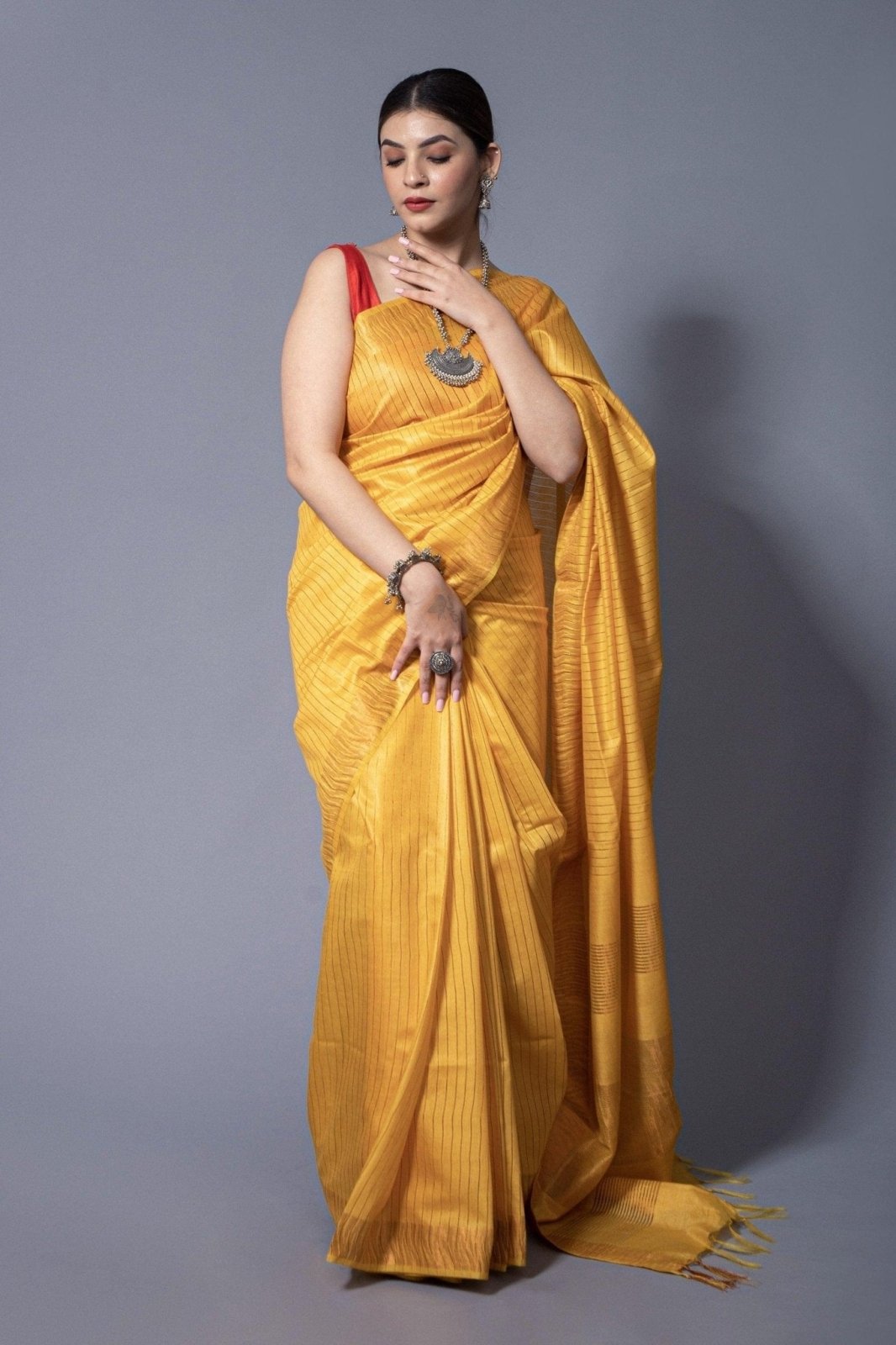
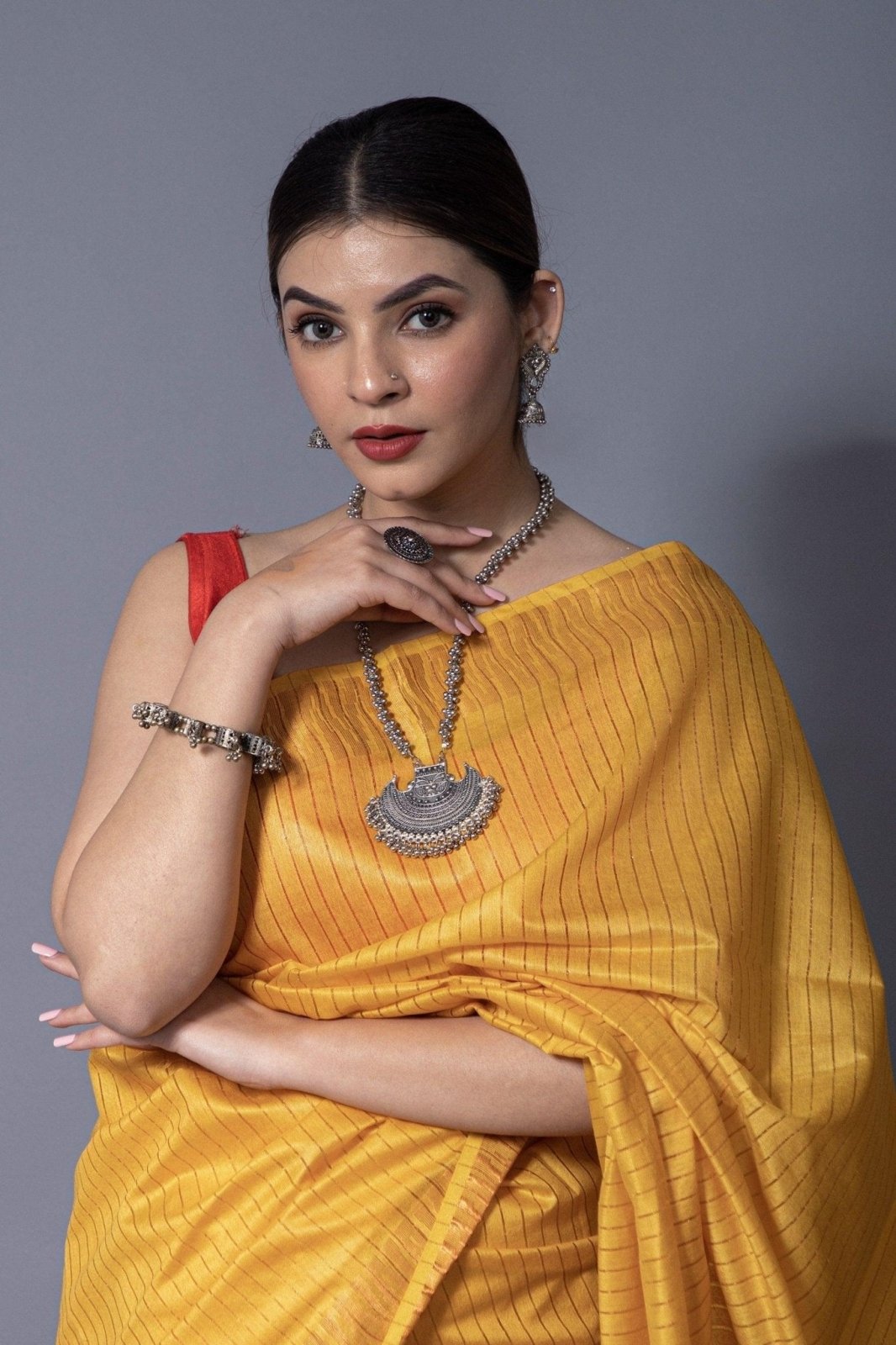
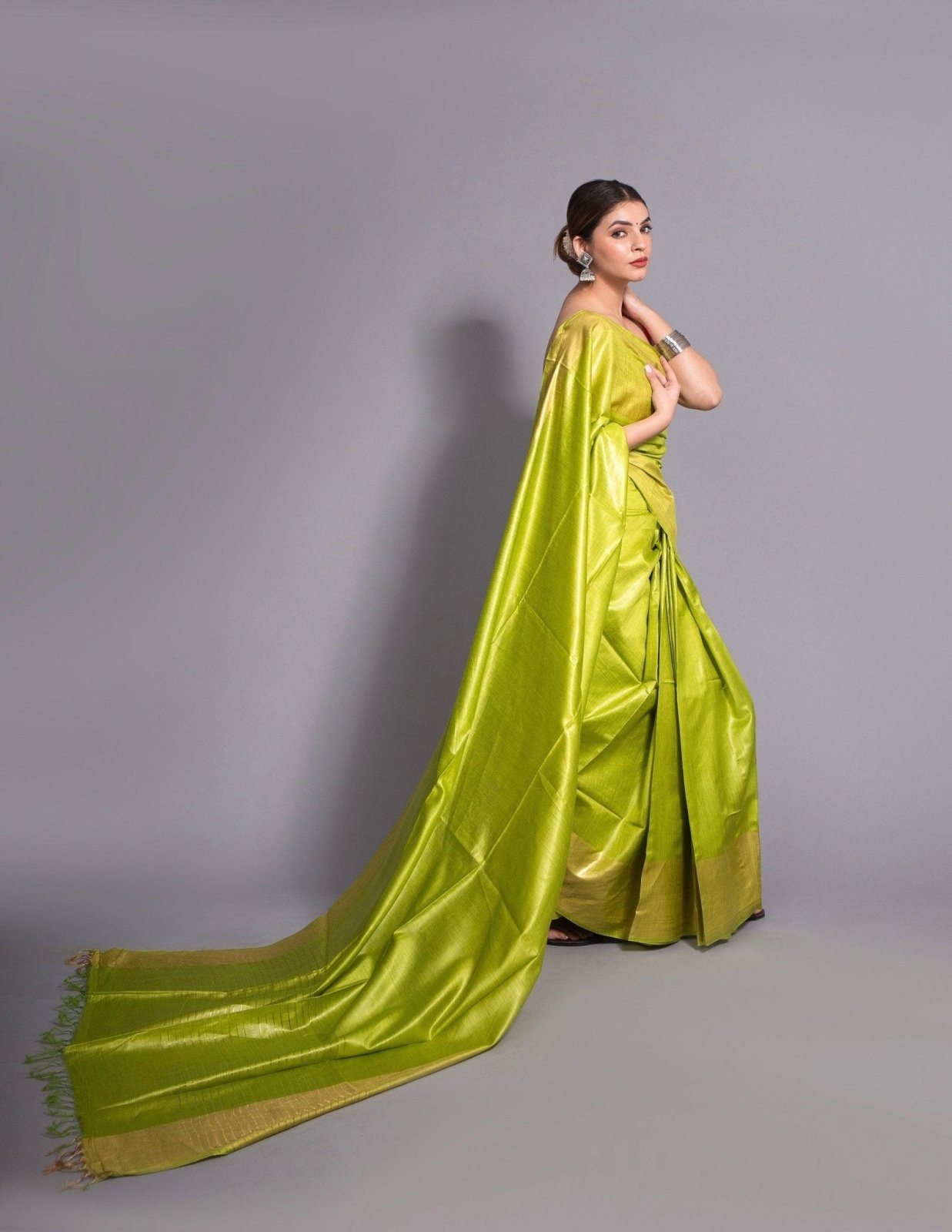
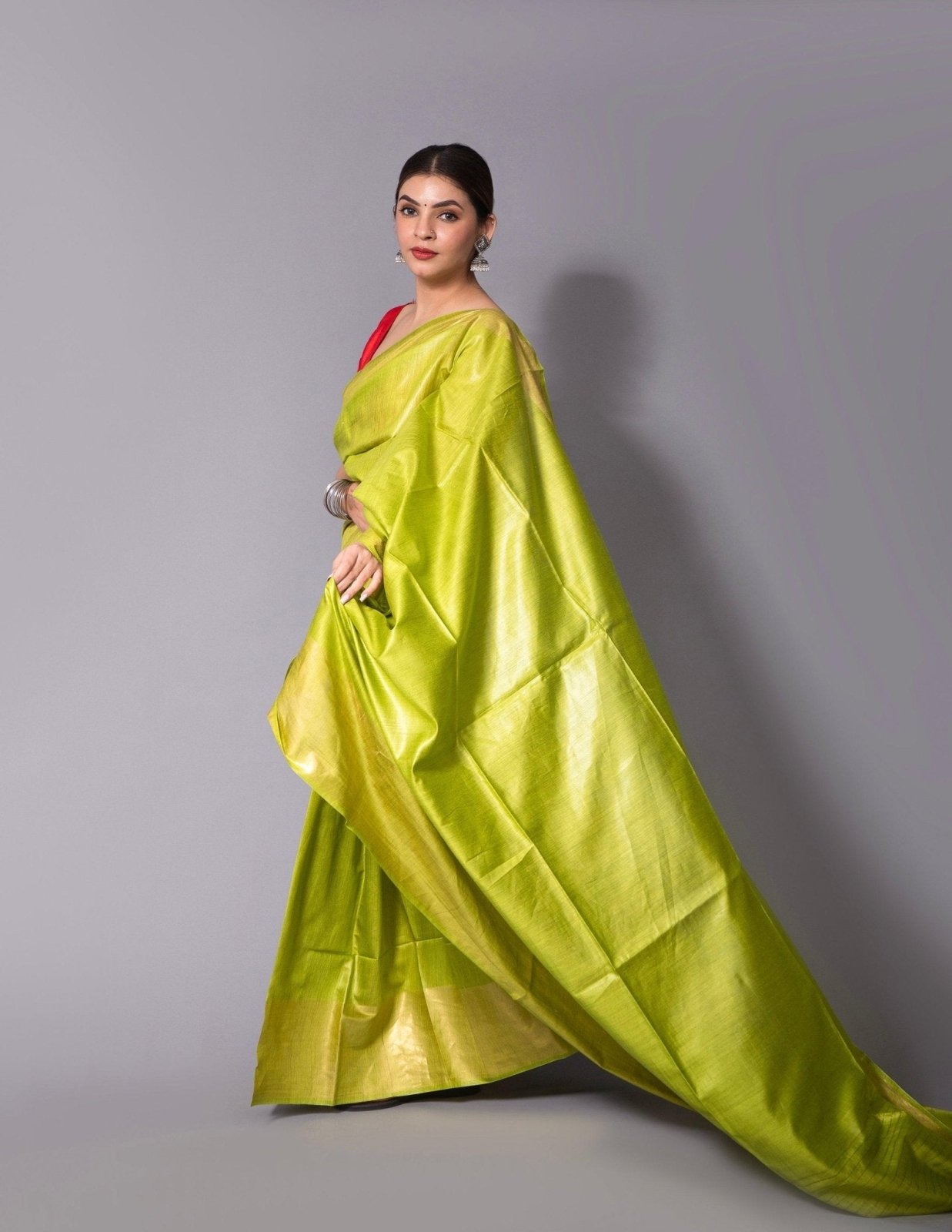
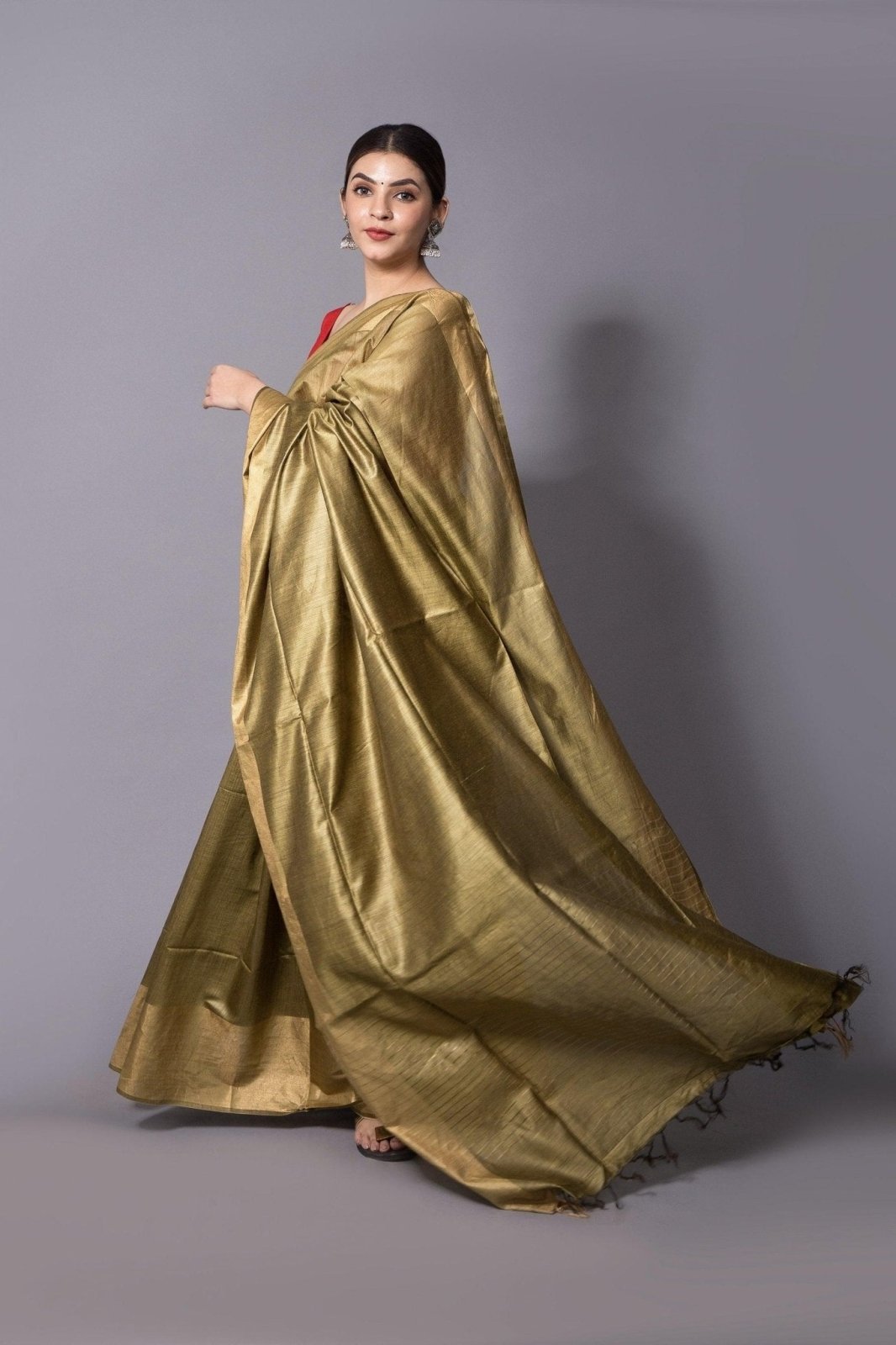
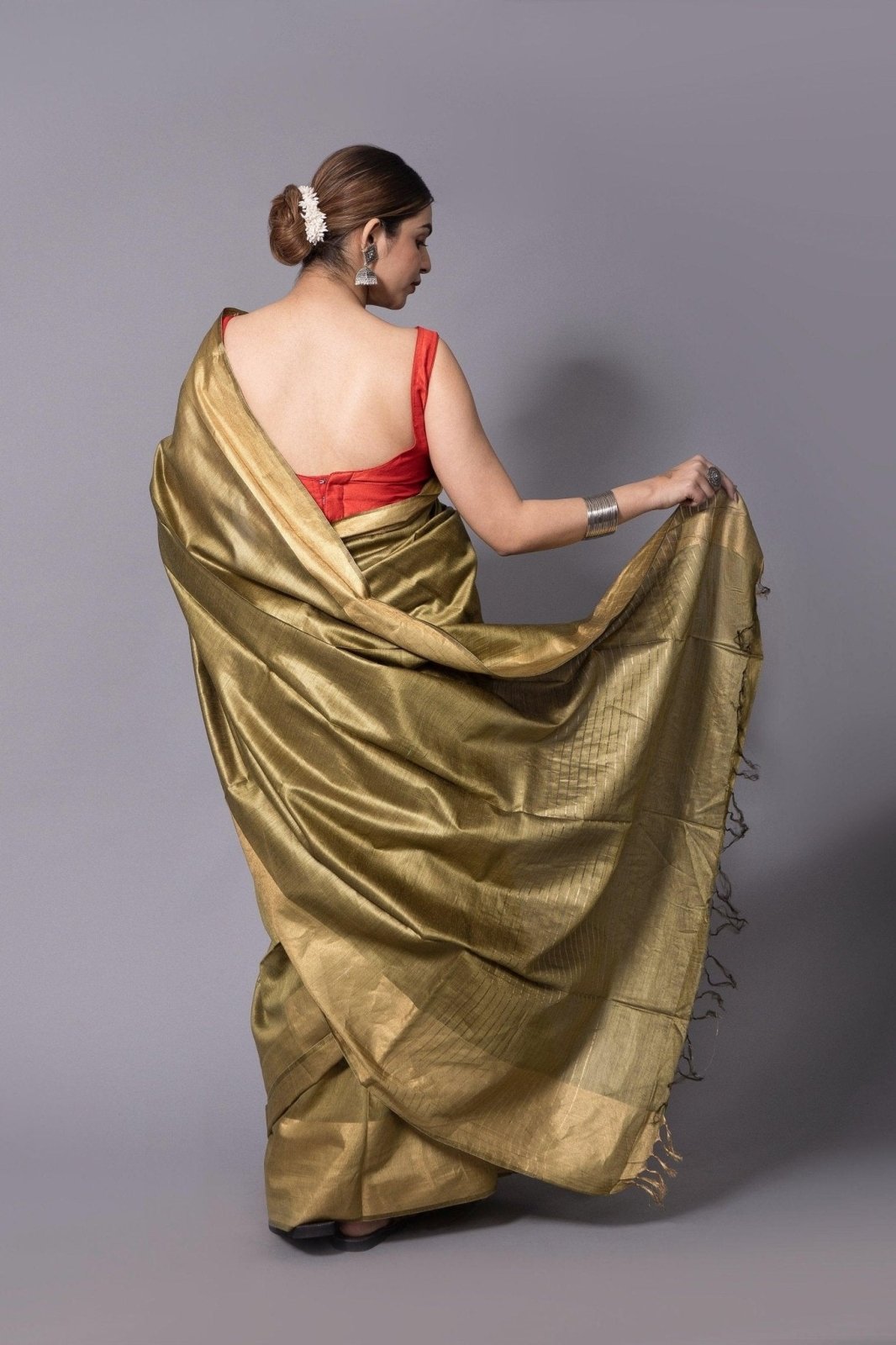
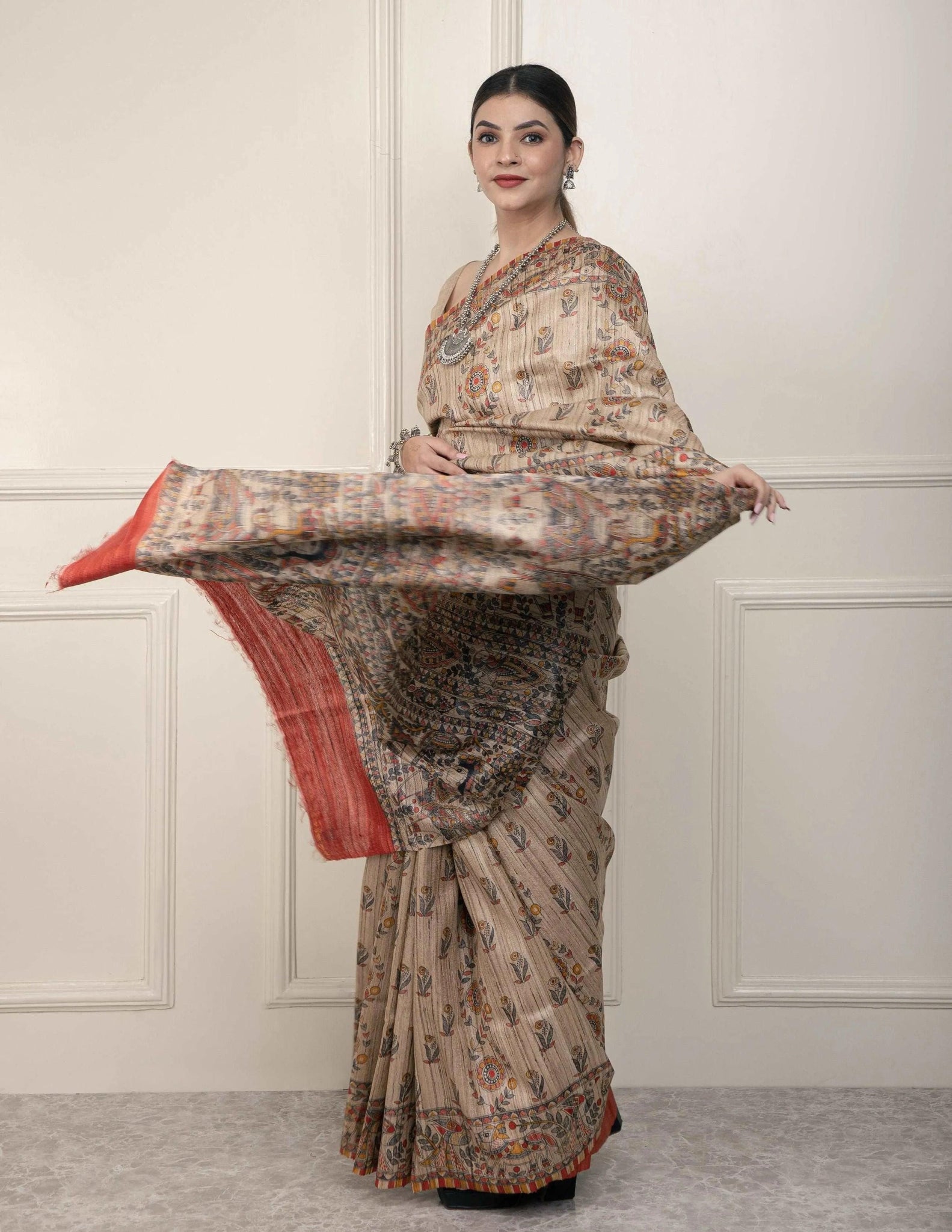
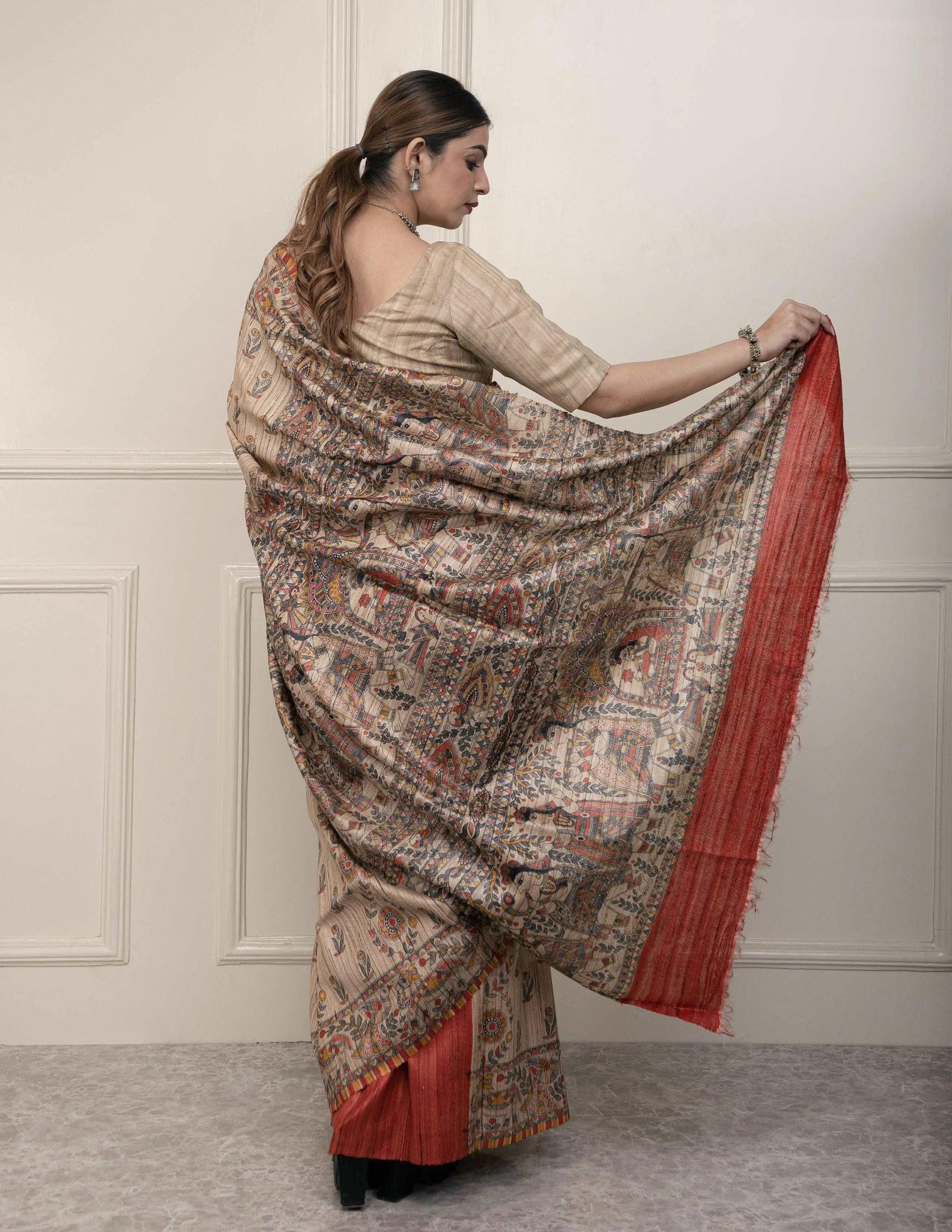
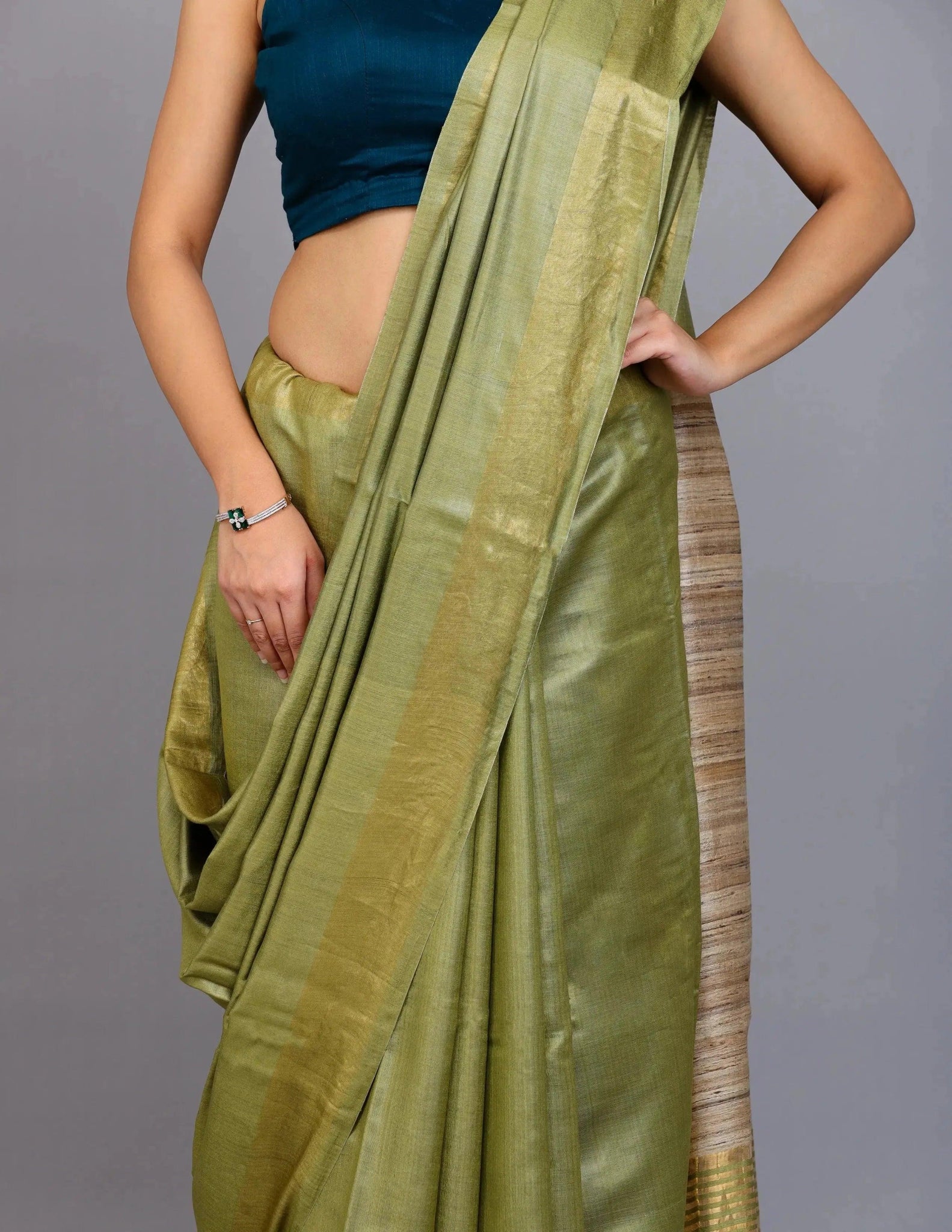
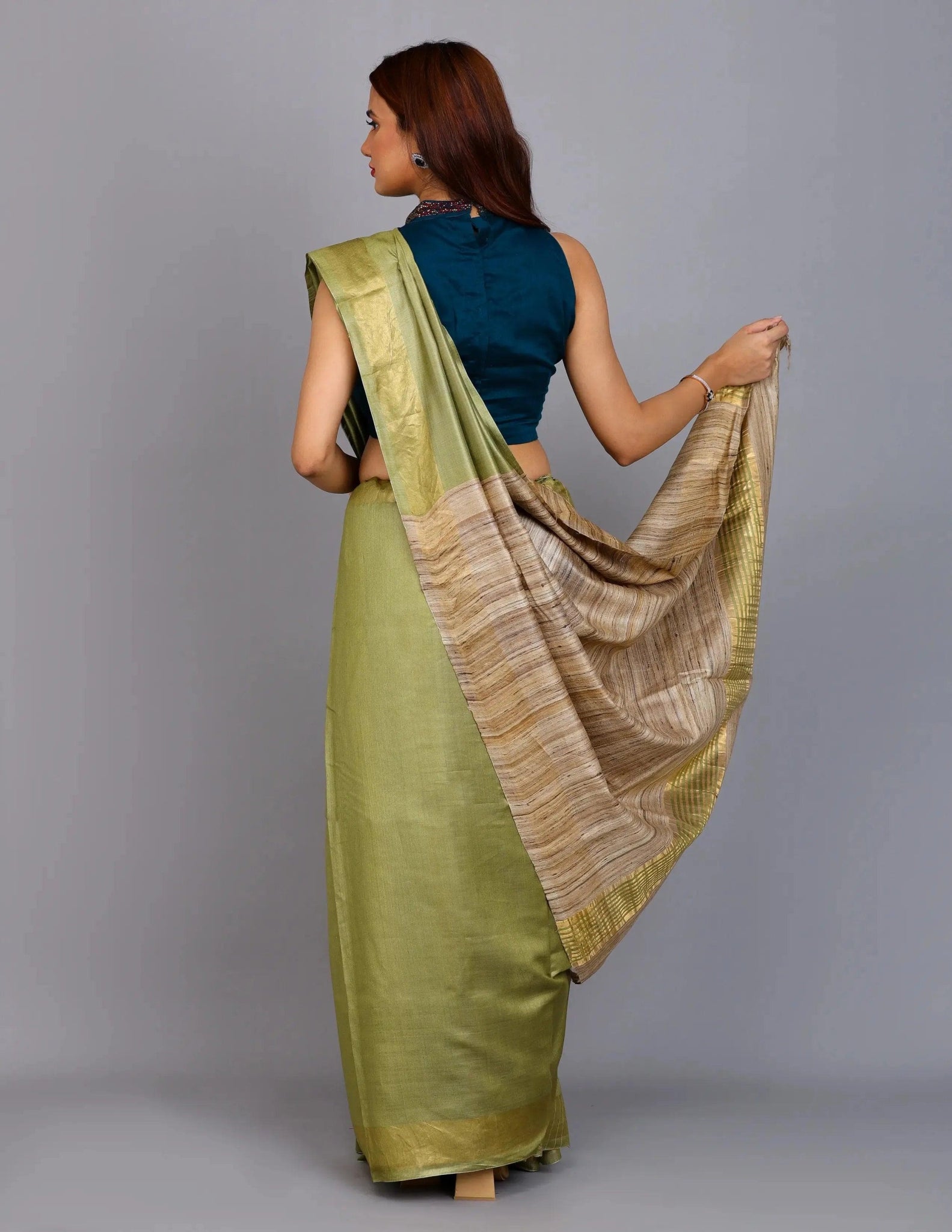
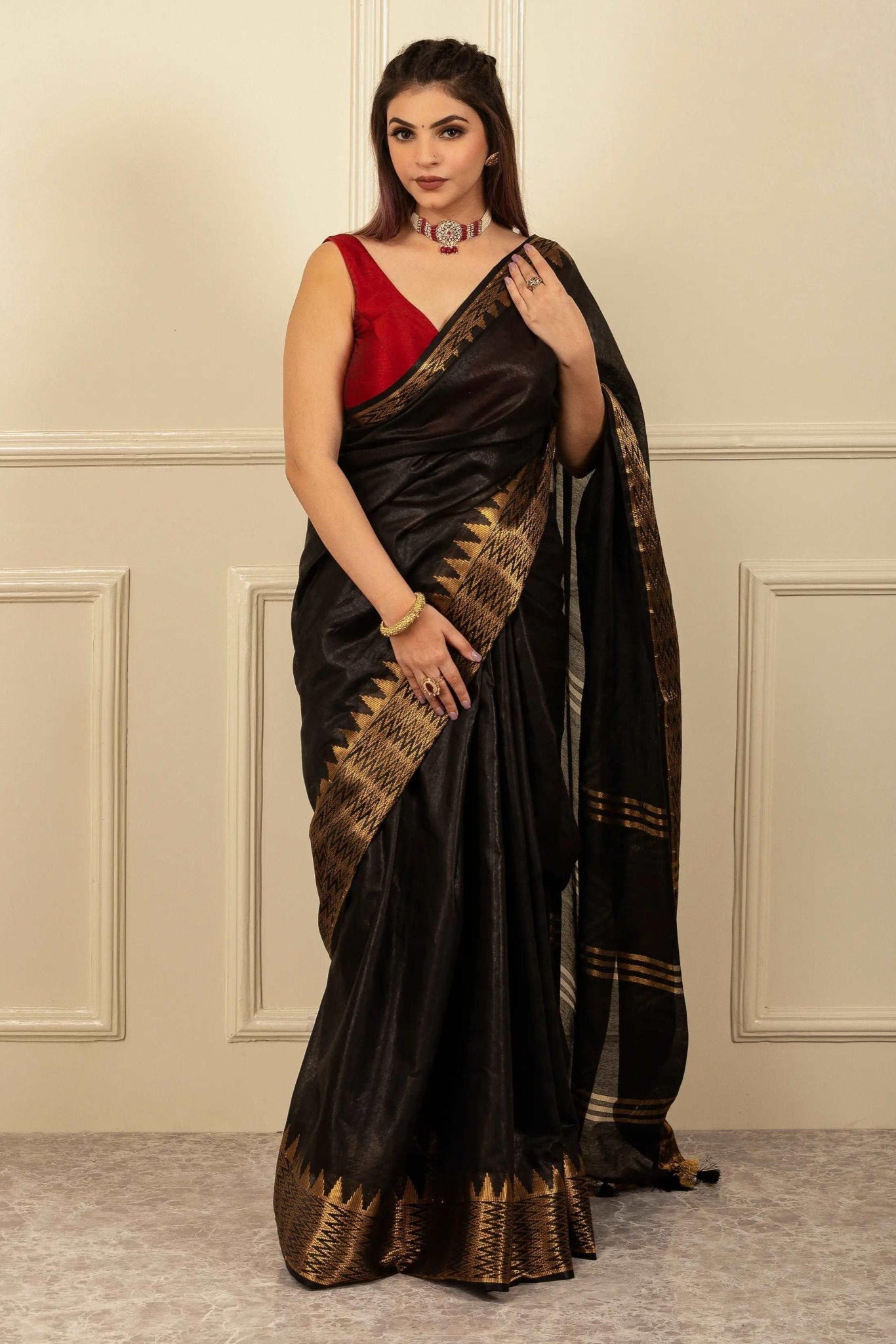
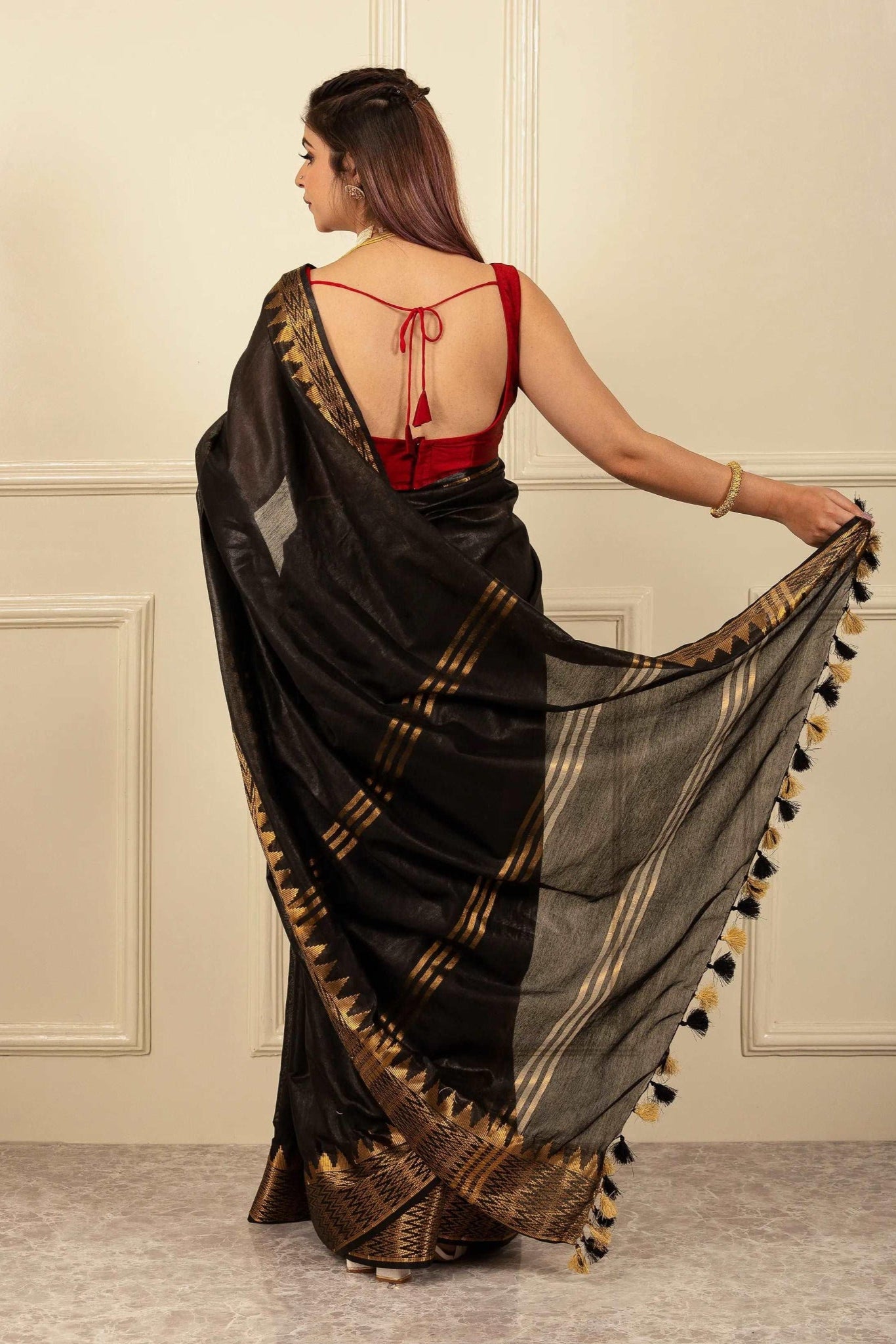
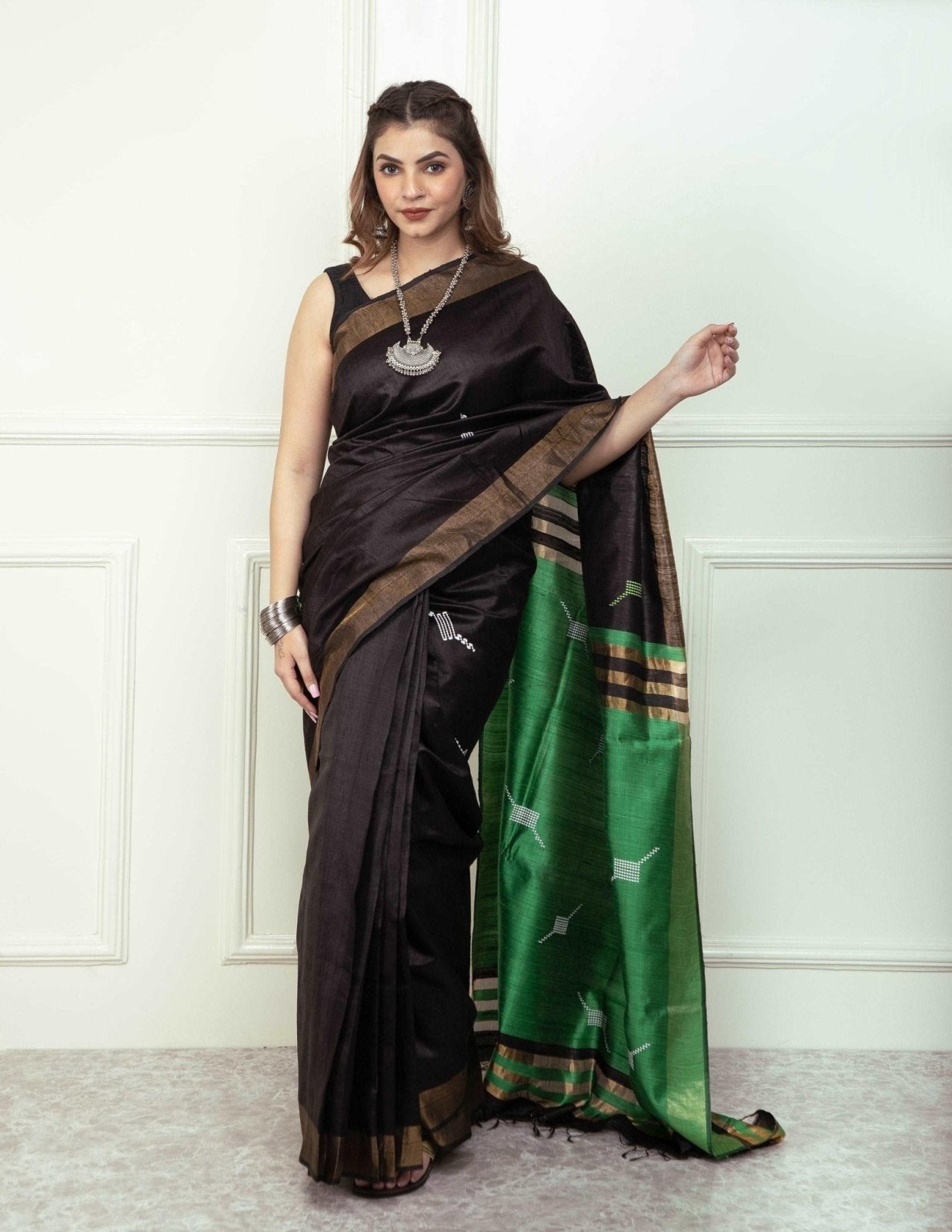
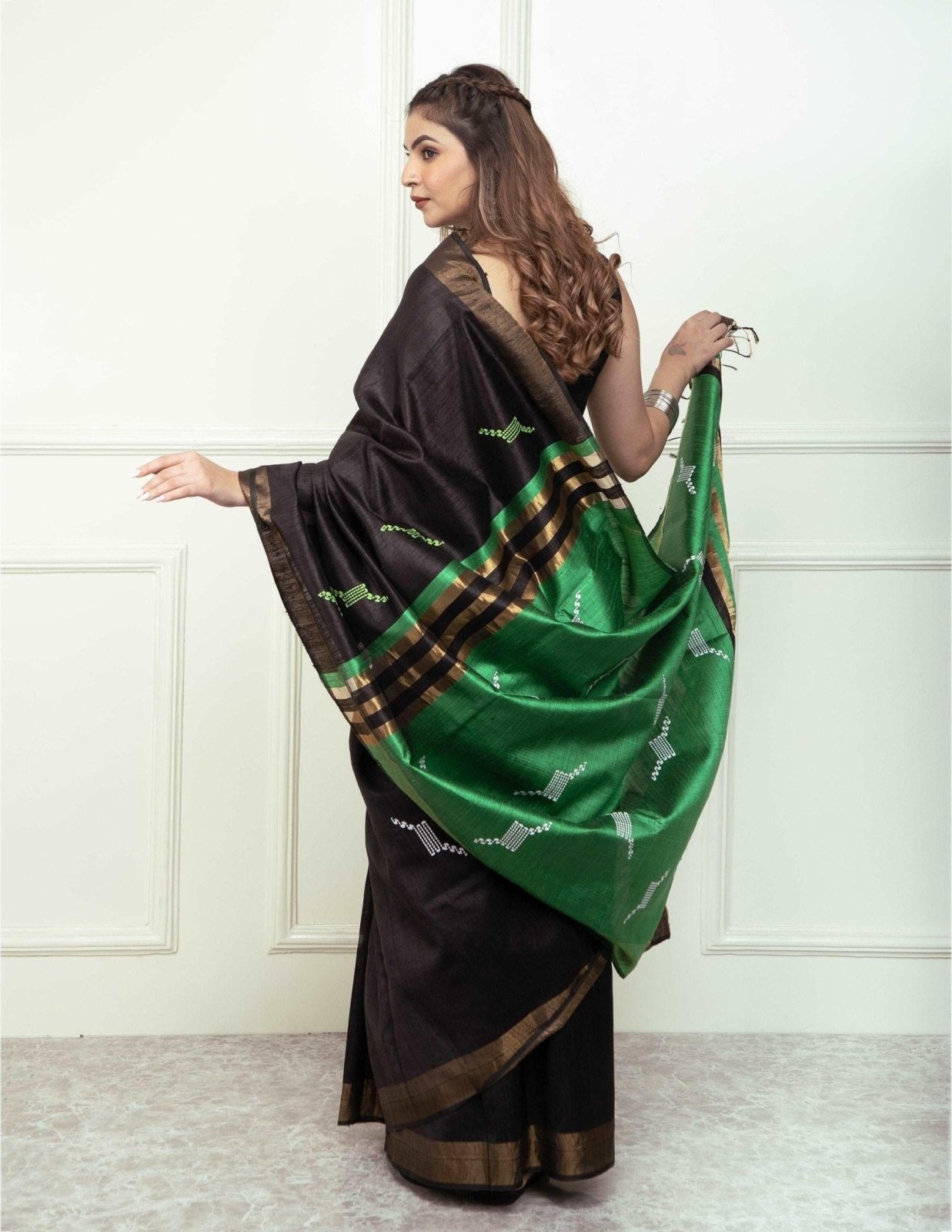
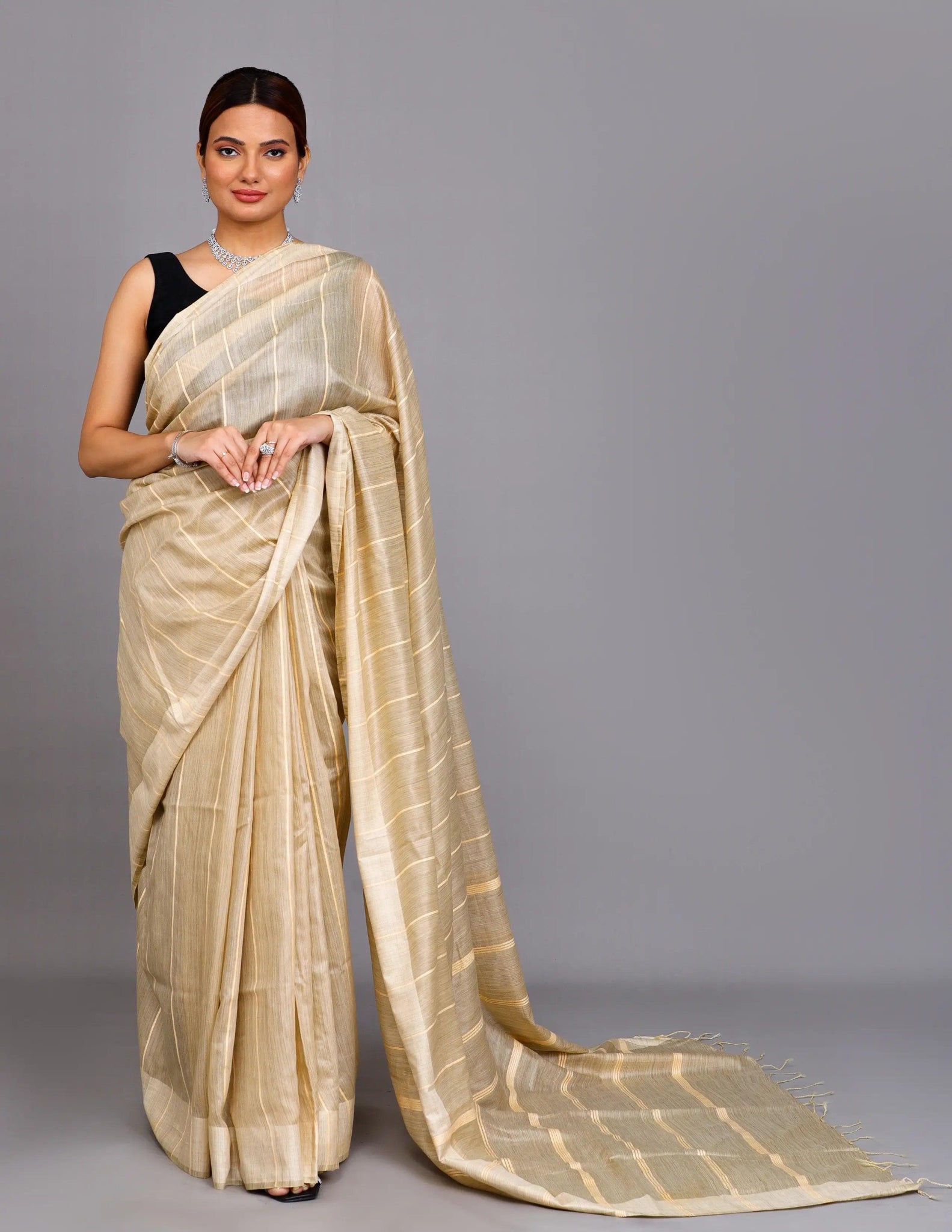
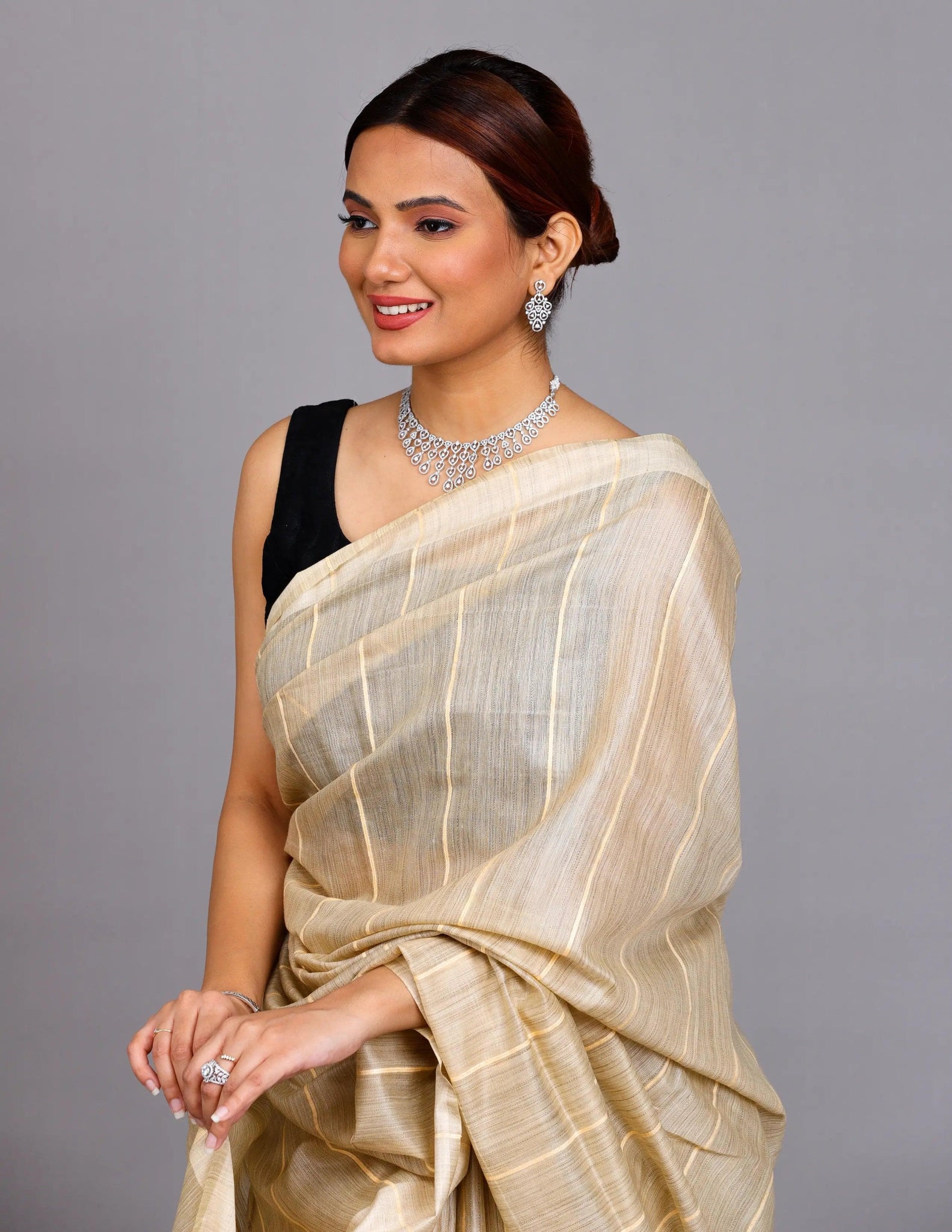
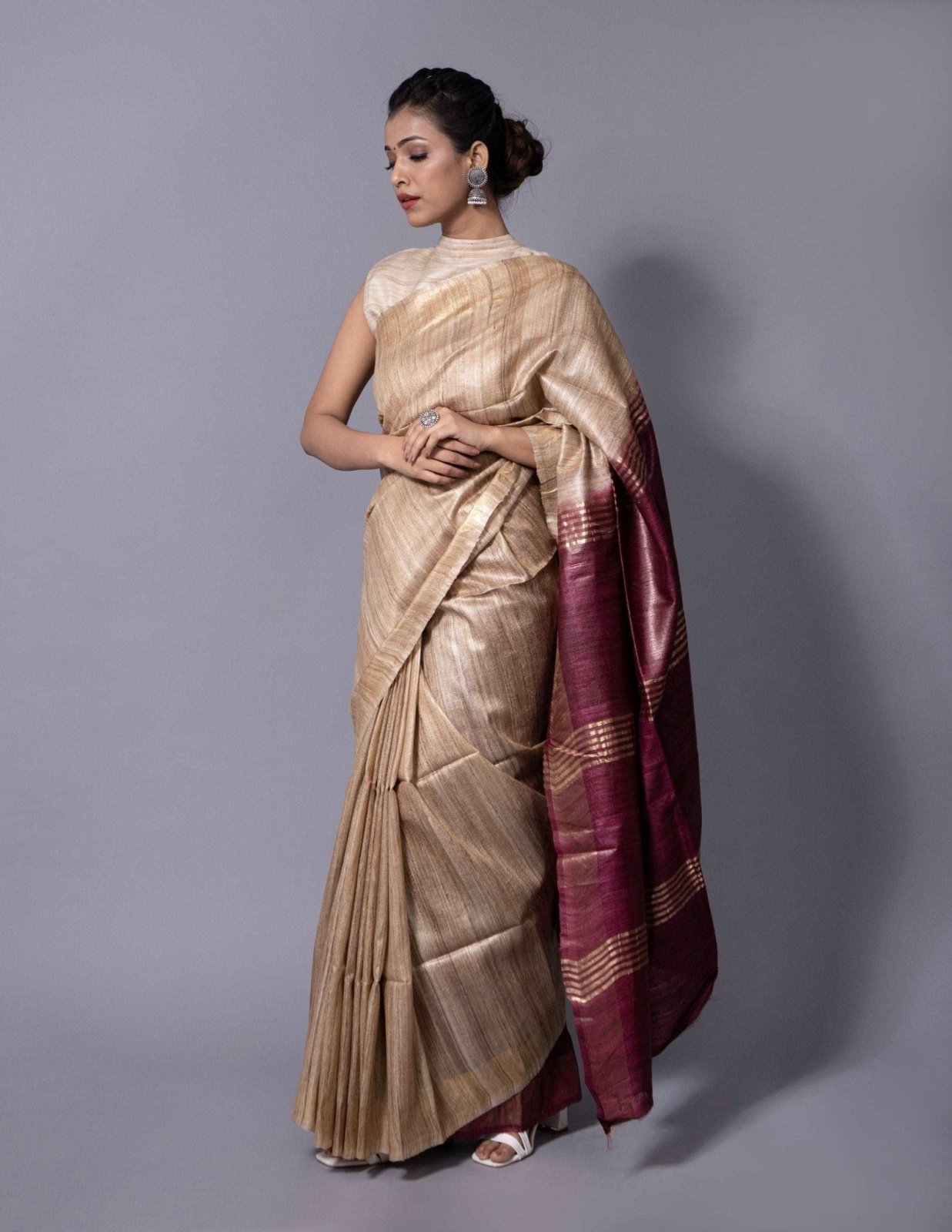
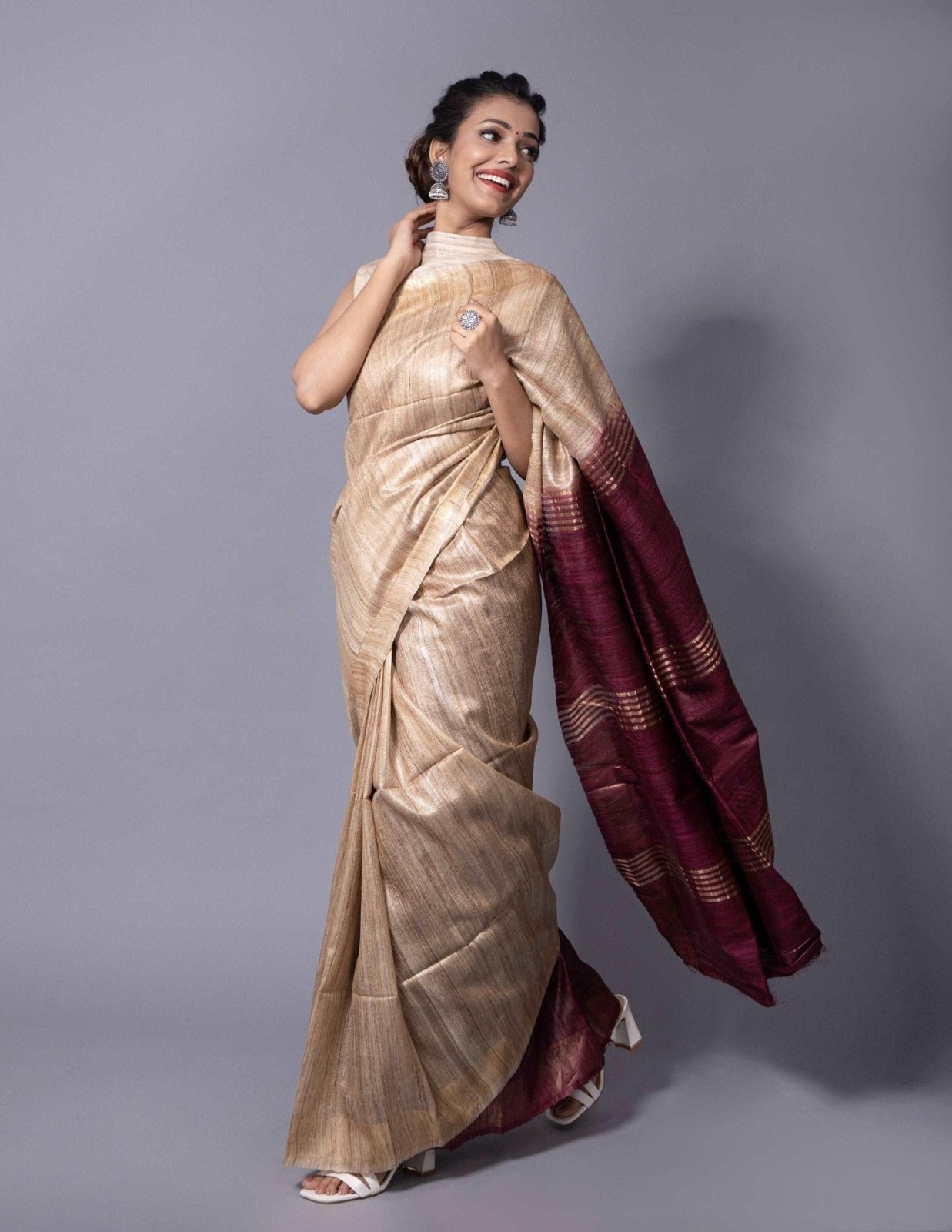
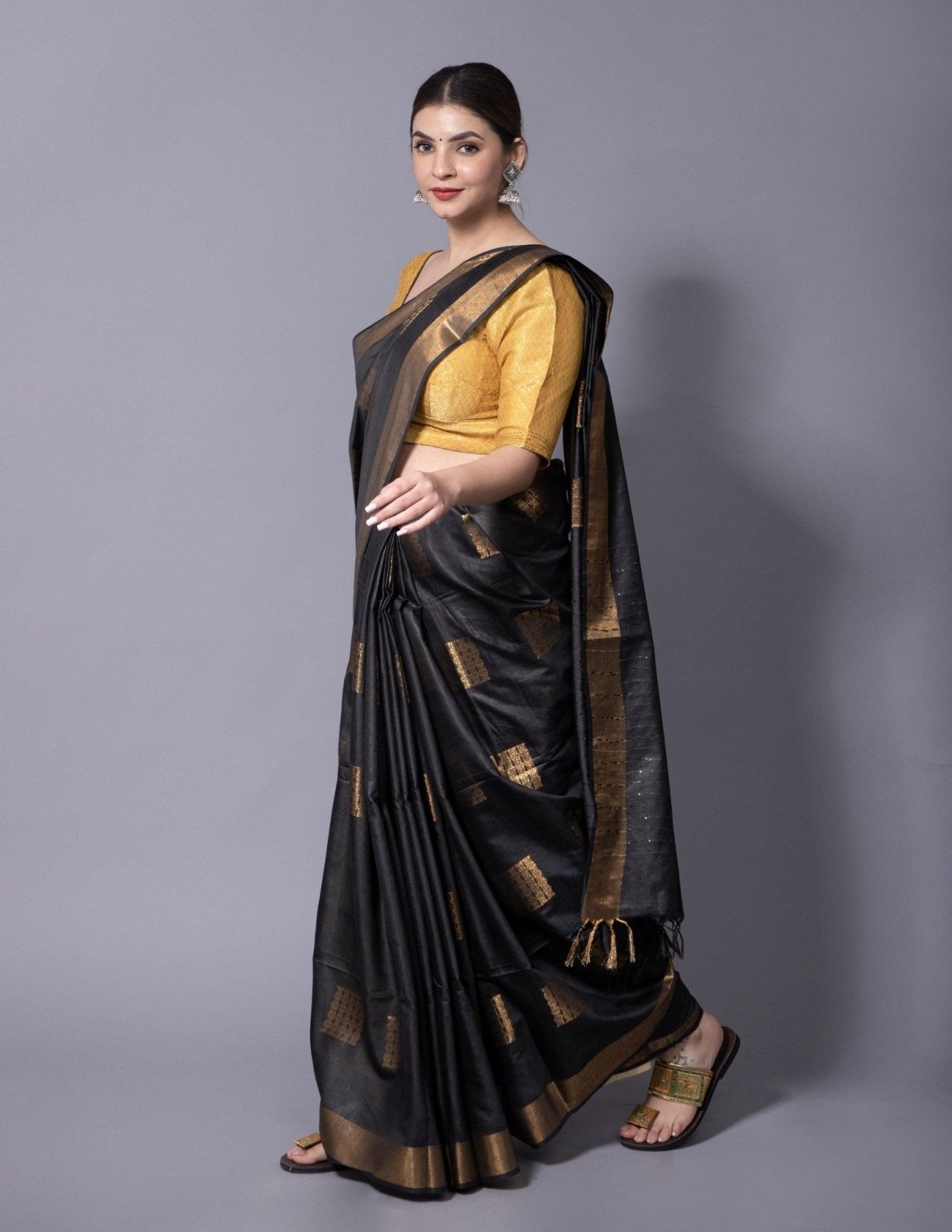
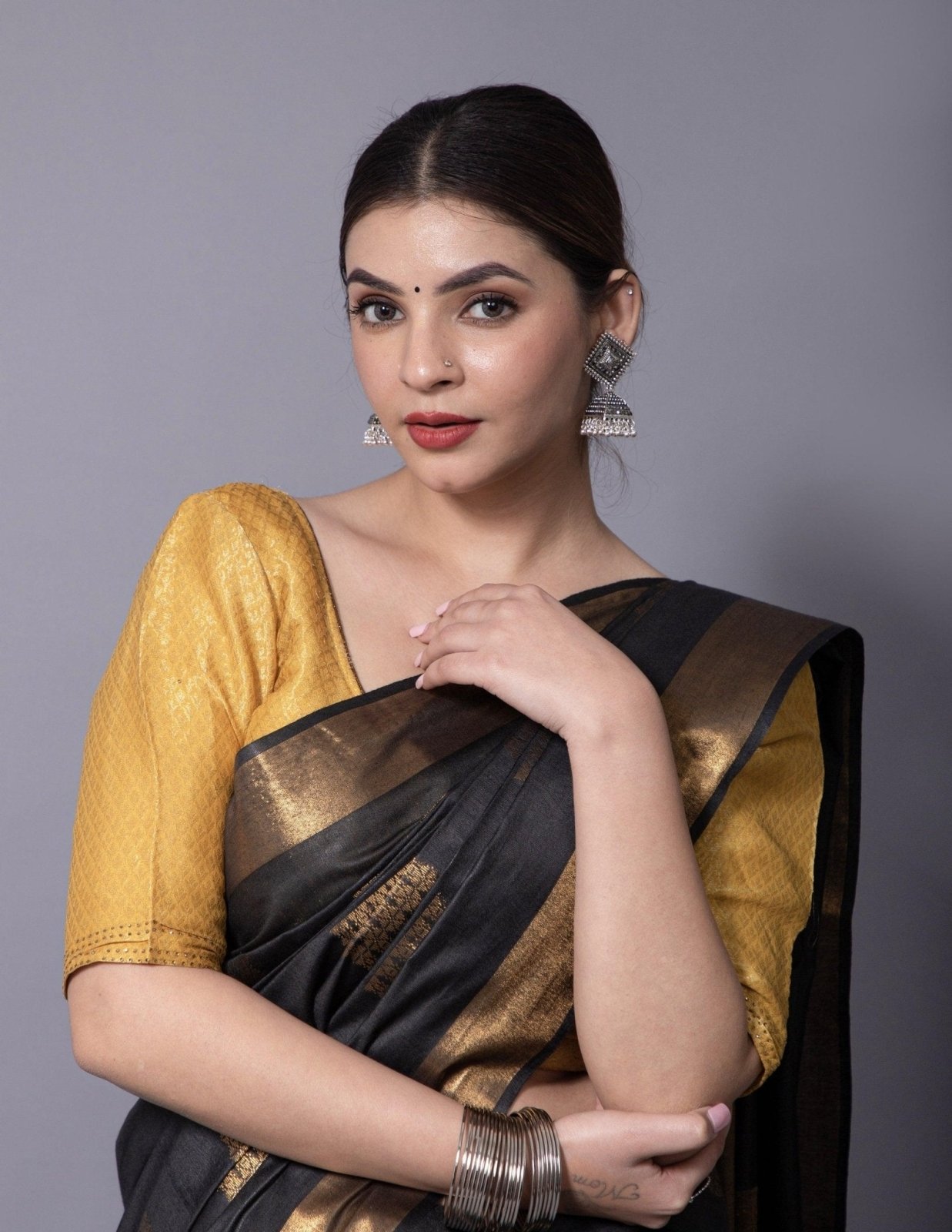
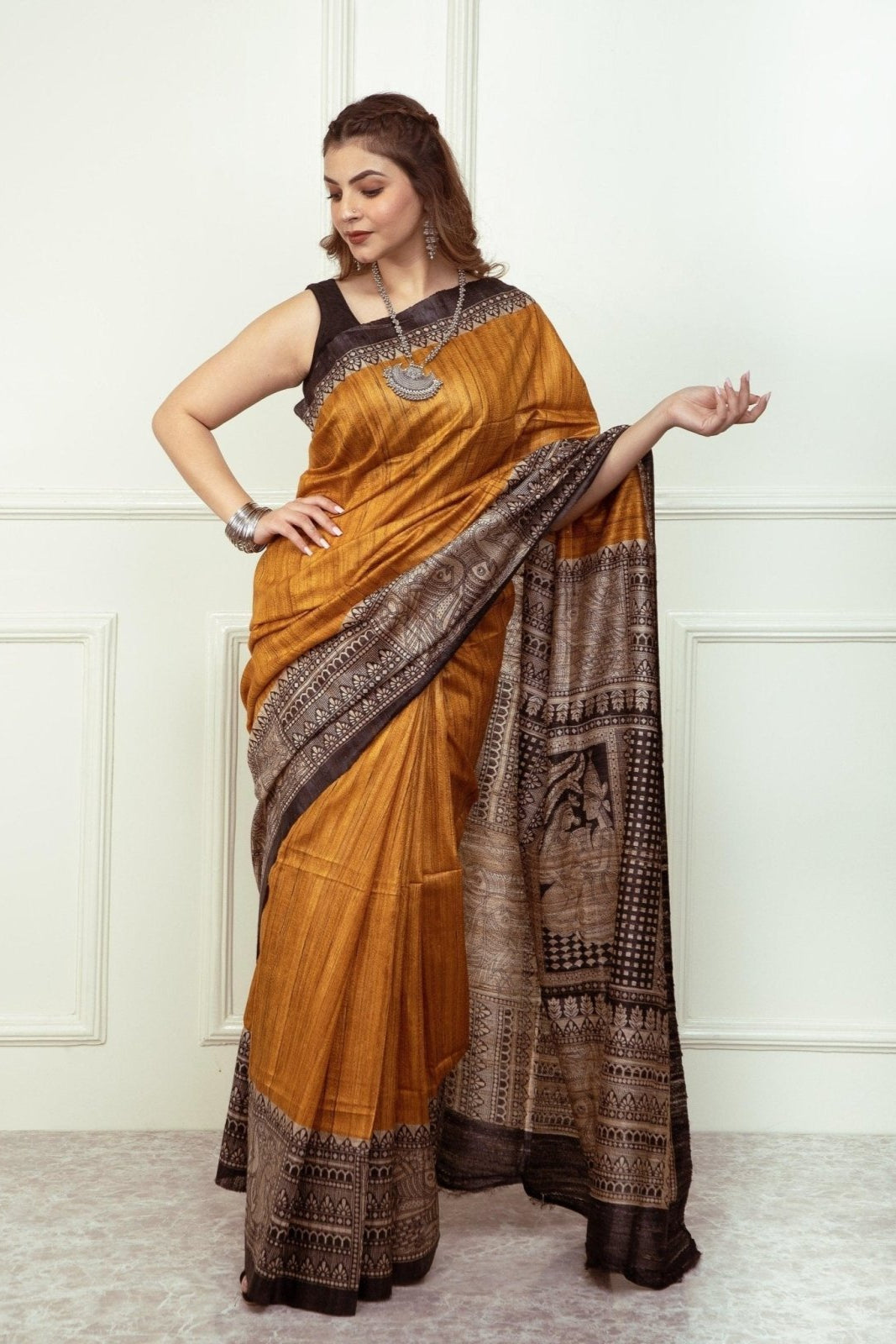
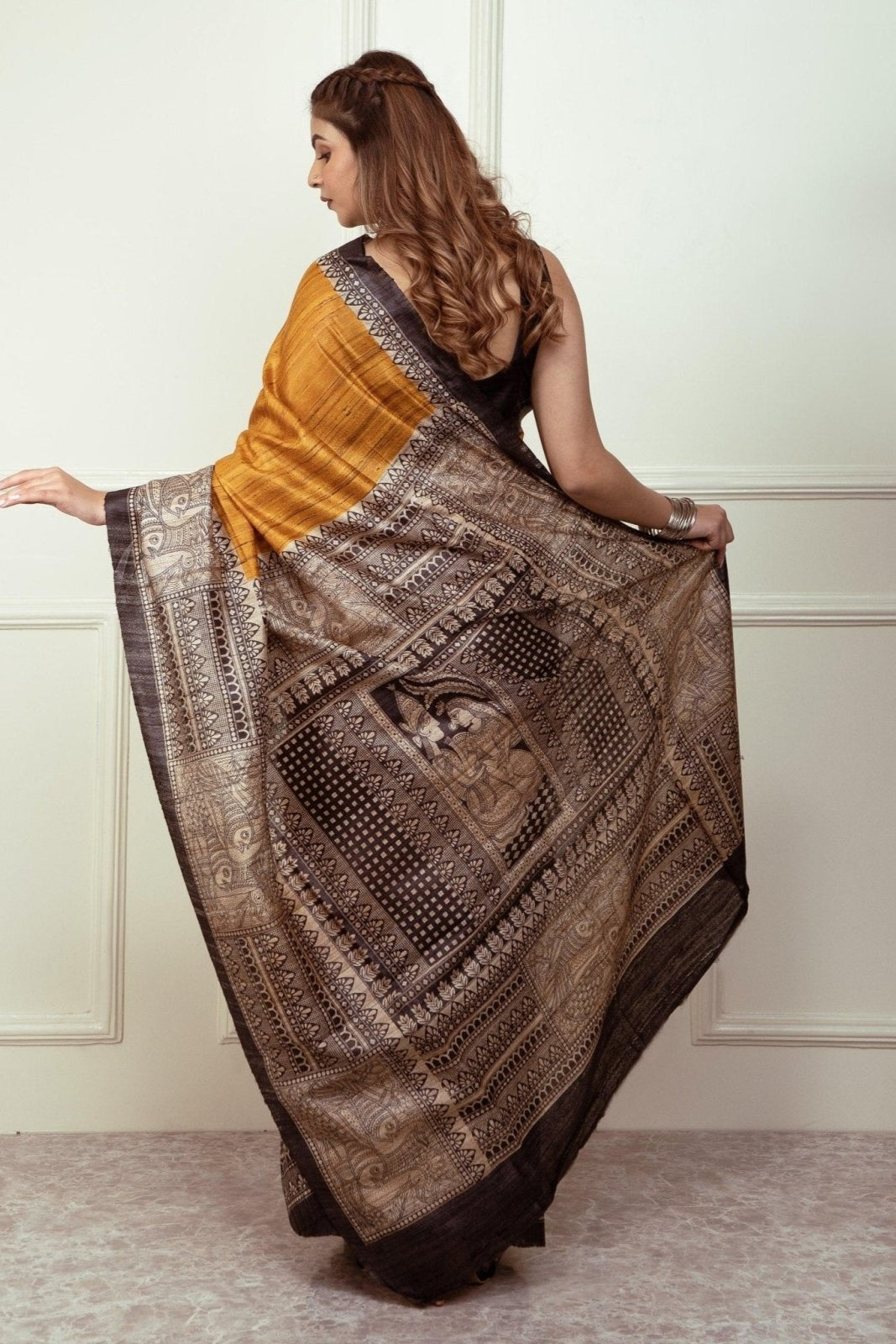
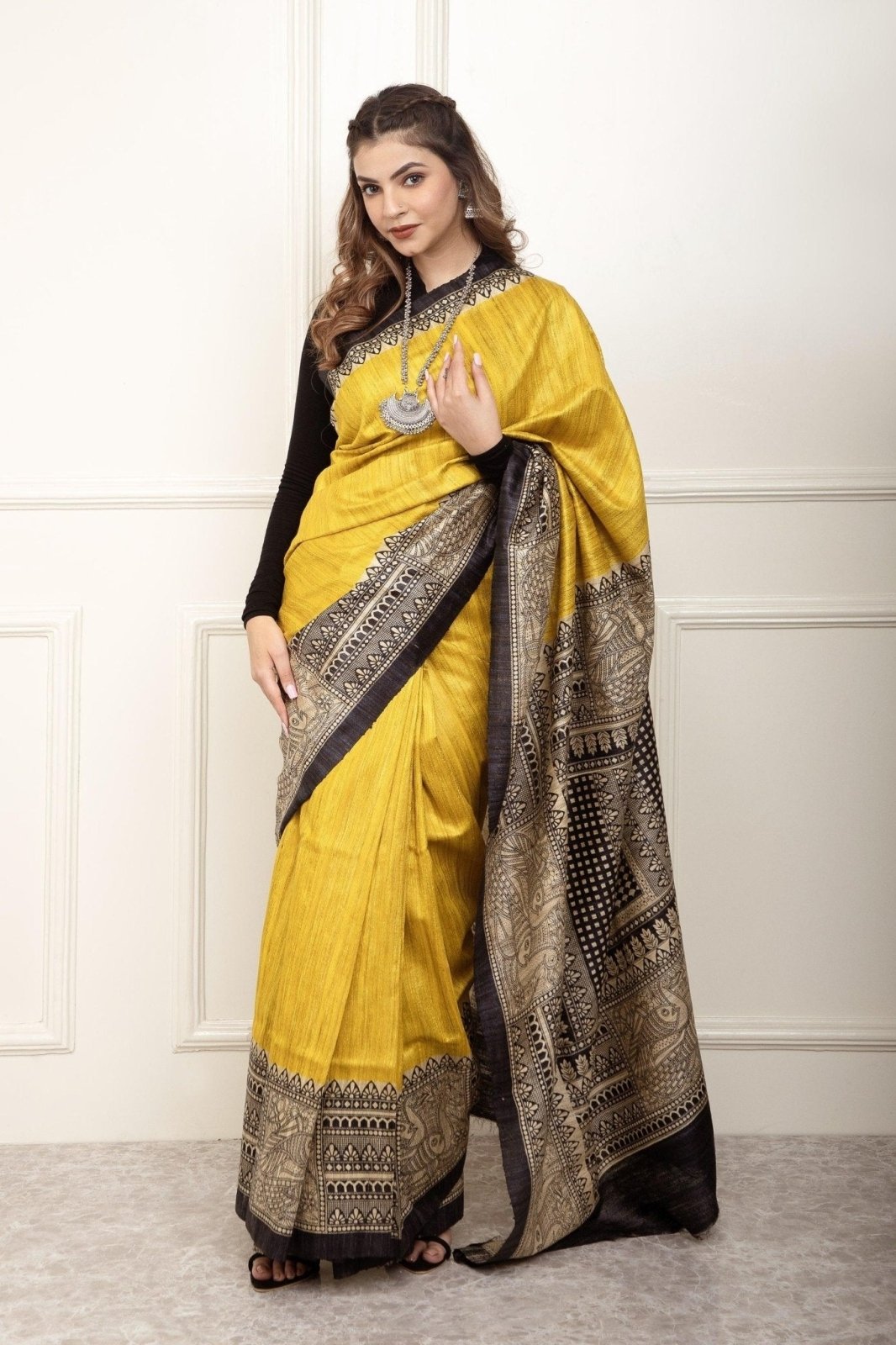
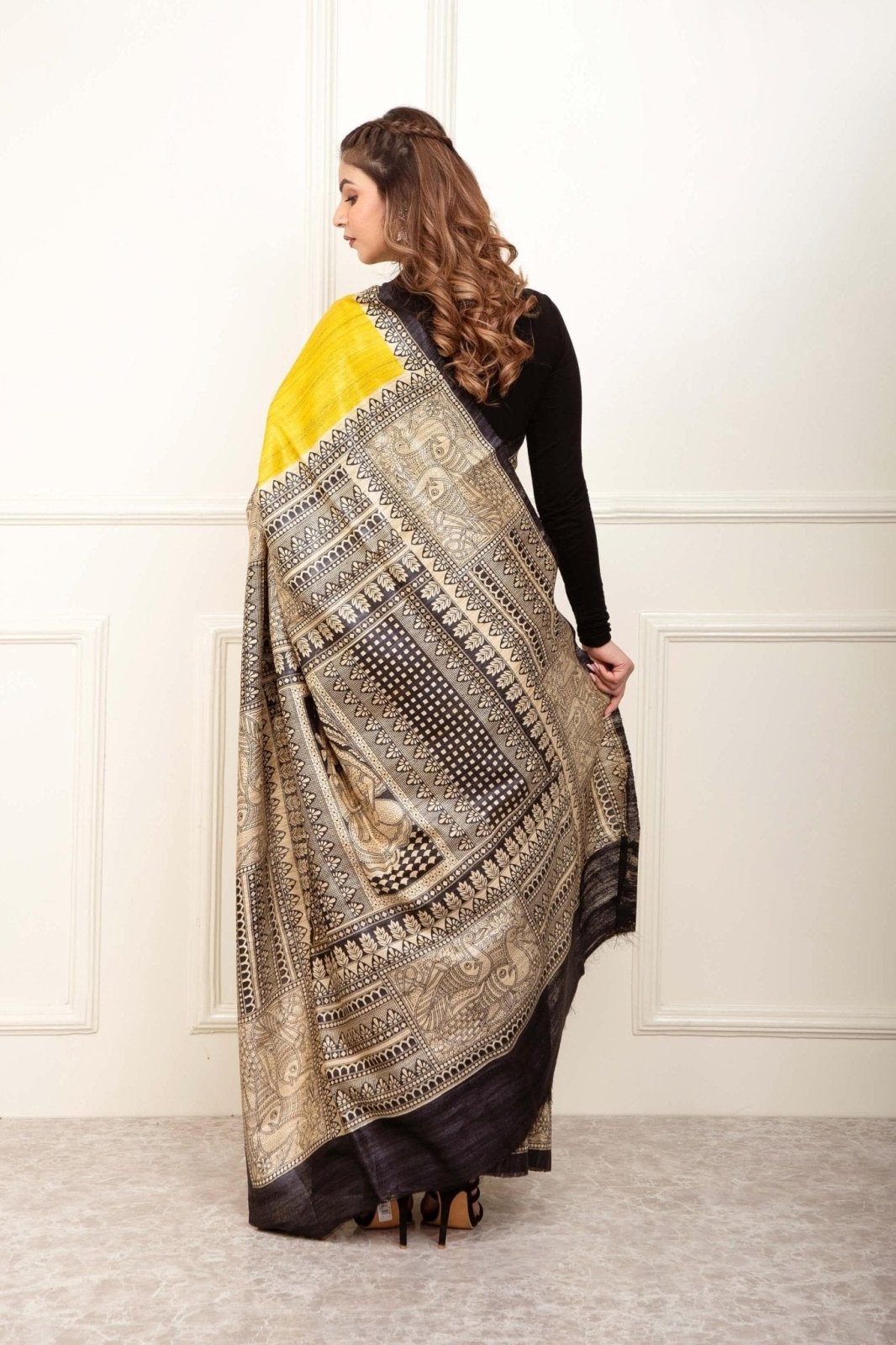
Silk isn't one fabric in this collection, it's three distinct types, each from a different silkworm and a different weaving tradition. Mulberry silk is the smoothest and most familiar, the base for classics like Kanjeevaram. Tussar silk comes from wild, non-mulberry silkworms and carries a coarser, textured finish with a natural matte sheen. Muga silk is rarer still, produced only in Assam, prized for a golden hue that actually deepens with every wash rather than fading.
Every silk saree at Indidha comes from a weaver partner working one of these three traditions, not a mill line. The base length across the collection is 5.5 meters, and most pieces include an unstitched running blouse piece, though as always, check the individual listing to confirm. Because silk holds weight and structure differently than cotton or linen, it drapes with more presence, which is part of why it's the fabric people reach for when the occasion calls for it.
If you want the full picture of how these silk types differ before choosing, our guide to the types of silk sarees in India breaks down mulberry, tussar, muga, and more in one place. If muga silk specifically has caught your eye, our piece on muga silk sarees from Assam covers what makes it rare and how pricing works.
Silk needs more care than cotton or linen. Dry clean rather than wash at home, store wrapped in a muslin or cotton cloth rather than plastic, and keep it away from direct sunlight and strong perfume, both of which can affect the color and fiber over time.
Frequently Asked Questions
What's the difference between mulberry, tussar, and muga silk?
Mulberry silk is the smoothest and most common, used in classics like Kanjeevaram. Tussar comes from wild silkworms and has a coarser, textured, matte finish. Muga is the rarest, produced only in Assam, known for a golden sheen that deepens with each wash.
Can I wash a silk saree at home?
Dry cleaning is recommended over home washing for most silk sarees, especially tussar and muga, to protect the fiber and any embellishment.
Why is muga silk more expensive than other silks?
Muga silk comes from a single silkworm species found only in Assam, which limits supply. It's also more labor-intensive to weave, and the fabric actually gets shinier with age, which adds to its long-term value.
Does every silk saree come with a blouse piece?
Most do, as an unstitched running blouse piece, but inclusion can vary by product, so check the specific listing before ordering.