Most engagement saree advice circles back to the same few answers: go red, go silk, go heavy. And if that's genuinely what you want, there's nothing wrong with it. But a lot of women arrive at their engagement wearing something that feels more like a category than a choice, and that's a different thing entirely.
This guide is for women who want to wear something that actually fits them, not just the occasion.
Start With How You Actually Want to Feel
Before fabric or color, it helps to ask a simpler question: what do you want your experience of the day to feel like? If you're someone who finds heavy silk constricting, a six-hour function in a stiff Kanjeevaram is going to be exhausting regardless of how it photographs. If you run warm, a layered embellished saree in peak wedding season is going to distract you from the actual moment.
This isn't about dressing casually or downplaying the occasion. It's about choosing a saree that you can be fully present in, which is probably the most practical thing you can do for a day that matters to you.
Understanding What Different Fabrics Actually Do
Silk
Silk drapes with structure and holds its shape well through a long event. It photographs beautifully because of the way it catches light. The tradeoff is weight and breathability, both of which depend heavily on the type of silk. Tussar silk, for instance, is noticeably lighter and has a more matte, textured surface compared to heavier Katan or Banarasi variants. Dupion has a slight stiffness from its irregular weave, which some people find gives the drape a more architectural quality.
If you want silk but find it uncomfortable in heat, lighter silk varieties are worth looking at before you default to the heaviest option on the shelf. The GRIT GAMINI in Tussar Ghicha Silk is a good example of what a textured, lighter silk option looks like in practice, with the woven surface doing most of the visual work without the density of a heavier weave.
Linen
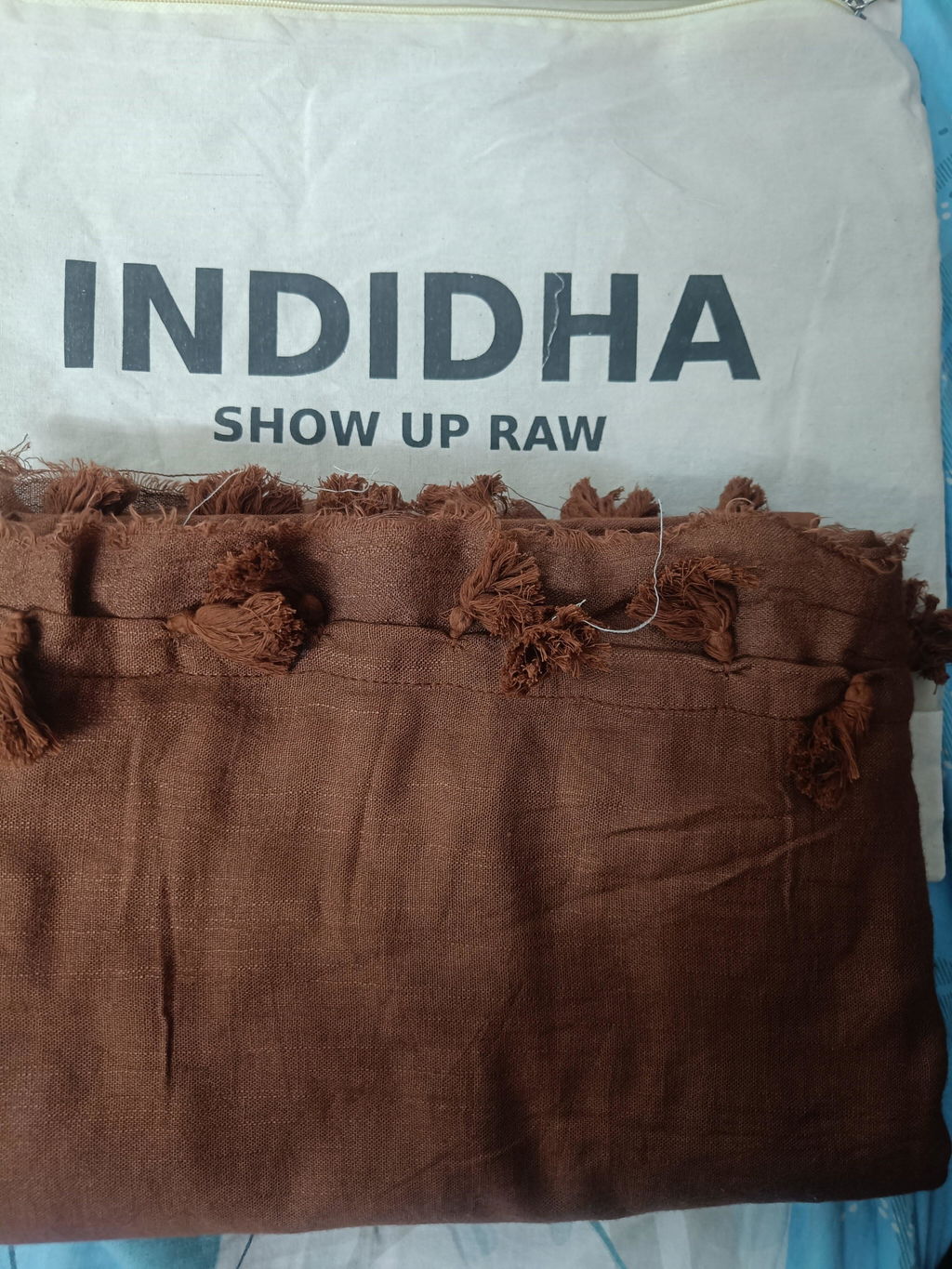
Linen is increasingly being chosen for daytime engagements and smaller, more intimate ceremonies. It's breathable, it drapes softly without clinging, and it gets better with wear over the course of a day rather than stiffer. The texture is distinctive without being loud, and it takes color well.
It's not the obvious engagement fabric, which is exactly why it works for women who want something a bit more considered. A well-chosen linen saree in a deep or unusual tone can read as intentional rather than understated.
Organza
Organza is sheer and lightweight, and it's often chosen when the goal is something that feels a little different from conventional silk without stepping away from occasion-appropriate dressing. The fabric has a natural crispness that holds a pleated pallu well, and when it comes with a handwoven border, the contrast between the sheer body and the structured border is genuinely interesting to look at. The organza collection covers a few different border treatments if you want to see how the fabric behaves across different styles.
Color Without the Pressure
Red and pink remain the most common choices for engagements, and they work for good reasons. They photograph with warmth, they read as celebratory, and families tend to respond well to them. But they're not the only options, and for women who genuinely don't reach for those colors in other areas of their life, wearing them on a significant day can feel a little like dressing as a version of yourself that doesn't quite exist.
Jewel tones, deep earthy shades, terracotta, indigo, and rich neutrals all work well for evening engagements. For daytime ceremonies with natural light, softer and more unusual colors often photograph better than heavily saturated ones. The RUST SQUARE in Dupion Silk is a good reference point for how a non-traditional color can feel completely appropriate for a formal occasion when the fabric carries enough weight and the weave is well-crafted.
If you're navigating family expectations around color while still wanting something that feels like your own choice, a deeper or slightly unusual version of a conventional color (a terracotta rather than orange, a plum rather than purple) is usually a more comfortable middle ground than an outright departure.
Blouse Choices That Change the Overall Feel
The blouse has an outsized effect on whether a saree reads as contemporary or traditional. A sleeveless, structured blouse in a complementary fabric shifts the whole silhouette toward something more modern, while a heavily embellished blouse pushes in the other direction. Neither is wrong, but it's worth choosing deliberately rather than defaulting to whatever matches in the obvious way.
If you're working with a saree that has significant texture or weave detail, a quieter blouse often lets the fabric speak more clearly. If the saree itself is relatively plain, a blouse with more structure or an interesting neckline gives the outfit more to work with. The blouse fabrics collection is a useful place to look if you're sourcing blouse material separately from the saree.
For Smaller and More Informal Engagements
Not every engagement is a large formal function. Some are small, home-based, and deliberately low-key, and dressing for those occasions is a slightly different problem. A heavy silk or an ornate weave can feel like too much for a gathering of thirty people in someone's living room.
Cotton sarees, particularly slub cotton and mul cotton, are genuinely appropriate here. They have enough visual character to feel dressed up without the formality of a heavier fabric. The Aniline Plum in Mul Cotton is an example of how a deep, considered color in a lightweight fabric can feel entirely right for a more personal setting. And if budget is a factor without wanting to compromise on how the saree looks, browsing silk options by price point gives a wider picture of what's available across the range.
A Few Things Worth Knowing Before You Buy
Handwoven sarees don't always need to be dry-cleaned, but different fabrics have very different care requirements. Ask specifically before you buy. A linen saree and a Katan silk saree have almost nothing in common in terms of how they should be handled after the event.
Also worth considering: how the saree will be stored afterward matters if you're thinking of wearing it again. Some silks are better stored flat. Some cottons can be hung. Getting this information at the point of purchase saves a lot of guesswork later.
If you want to look through a wider range of options organized by fabric, the full saree collection is browsable by fabric type, which makes it easier to compare how different weaves look at similar price points before committing.